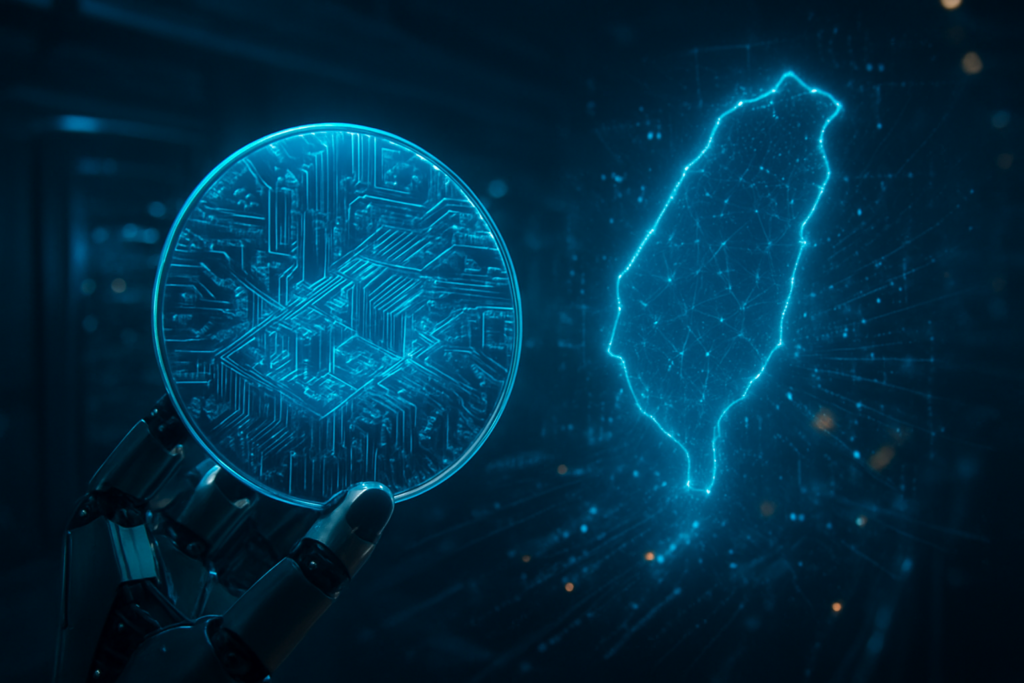
HSINCHU, Taiwan — As the world enters the final week of January 2026, the semiconductor industry has officially crossed the threshold into the "Angstrom Era." Taiwan Semiconductor Manufacturing Company (NYSE: TSM), the world's most critical foundry, has formally announced the commencement of high-volume manufacturing (HVM) for its groundbreaking 2-nanometer (N2) process technology. This milestone does more than just promise faster smartphones and more capable AI; it reinforces Taiwan’s "Silicon Shield," a unique geopolitical deterrent that renders the island indispensable to the global economy and, by extension, global security.
The activation of 2nm production at Fab 20 in Baoshan and Fab 22 in Kaohsiung comes at a delicate moment in international relations. As the United States and Taiwan finalize a series of historic trade accords under the "US-Taiwan Initiative on 21st-Century Trade," the 2nm node emerges as the ultimate bargaining chip. With NVIDIA (NASDAQ: NVDA) and Apple (NASDAQ: AAPL) having already secured the lion's share of this new capacity, the world’s reliance on Taiwanese silicon has reached an unprecedented peak, solidifying the island’s role as the "Geopolitical Anchor" of the Pacific.
The Nanosheet Revolution: Inside the 2nm Breakthrough
The shift to the 2nm node represents the most significant architectural overhaul in semiconductor manufacturing in over a decade. For the first time, TSMC has transitioned away from the long-standing FinFET (Fin Field-Effect Transistor) structure to a Nanosheet Gate-All-Around (GAAFET) architecture. In this design, the gate wraps entirely around the channel on all four sides, providing superior control over current flow, drastically reducing leakage, and allowing for lower operating voltages. Technical specifications released by TSMC indicate that the N2 node delivers a 10–15% performance boost at the same power level, or a staggering 25–30% reduction in power consumption compared to the previous 3nm (N3E) generation.
Industry experts have been particularly stunned by TSMC’s initial yield rates. Reports from within the Hsinchu Science Park suggest that logic test chip yields for the N2 node have stabilized between 70% and 80%—a remarkably high figure for a brand-new architecture. This maturity stands in stark contrast to earlier struggles with the 3nm ramp-up and places TSMC in a dominant position compared to its nearest rivals. While Samsung (KRX: 005930) was the first to adopt GAA technology at the 3nm stage, its 2nm (SF2) yields are currently estimated to hover around 50%, making it difficult for the South Korean giant to lure high-volume customers away from the Taiwanese foundry.
Meanwhile, Intel (NASDAQ: INTC) has officially entered the fray with its own 18A process, which launched in high volume this week for its "Panther Lake" CPUs. While Intel has claimed the architectural lead by being the first to implement backside power delivery (PowerVia), TSMC’s conservative decision to delay backside power until its A16 (1.6nm) node—expected in late 2026—appears to have paid off in terms of manufacturing stability and predictable scaling for its primary customers.
The Concentration of Power: Who Wins the 2nm Race?
The immediate beneficiaries of the 2nm era are the titans of the AI and mobile industries. Apple has reportedly booked more than 50% of TSMC’s initial 2nm capacity for its upcoming A20 and M6 chips, ensuring that the next generation of iPhones and MacBooks will maintain a significant lead in on-device AI performance. This strategic lock-on capacity creates a massive barrier to entry for competitors, who must now wait for secondary production windows or settle for previous-generation nodes.
In the data center, NVIDIA is the primary benefactor. Following the announcement of its "Rubin" architecture at CES 2026, NVIDIA CEO Jensen Huang confirmed that the Rubin GPUs will leverage TSMC’s 2nm process to deliver a 10x reduction in inference token costs for massive AI models. The strategic alliance between TSMC and NVIDIA has effectively created a "hardware moat" that makes it nearly impossible for rival AI labs to achieve comparable efficiency without Taiwanese silicon. AMD (NASDAQ: AMD) is also waiting in the wings, with its "Zen 6" architecture slated to be the first x86 platform to move to the 2nm node by the end of the year.
This concentration of advanced manufacturing power has led to a reshuffling of market positioning. TSMC now holds an estimated 65% of the total foundry market share, but more importantly, it holds nearly 100% of the market for the chips that power the "Physical AI" and autonomous reasoning models defining 2026. For major tech giants, the strategic advantage is clear: those who do not have a direct line to Hsinchu are increasingly finding themselves at a competitive disadvantage in the global AI race.
The Silicon Shield: Geopolitical Anchor or Growing Liability?
The "Silicon Shield" theory posits that Taiwan’s dominance in high-end chips makes it too valuable to the world—and too dangerous to damage—for any conflict to occur. In 2026, this shield has evolved into a "Geopolitical Anchor." Under the newly signed 2026 Accords of the US-Taiwan Initiative on 21st-Century Trade, the two nations have formalized a "pay-to-stay" model. Taiwan has committed to a staggering $250 billion in direct investments into U.S. soil—specifically for advanced fabs in Arizona and Ohio—in exchange for Most-Favored-Nation (MFN) status and guaranteed security cooperation.
However, the shield is not without its cracks. A growing "hollowing out" debate in Taipei suggests that by moving 2nm and 3nm production to the United States, Taiwan is diluting its strategic leverage. While the U.S. is gaining "chip security," the reality of manufacturing in 2026 remains complex. Data shows that building and operating a fab in the U.S. costs nearly double that of a fab in Taiwan, with construction times taking 38 months in the U.S. compared to just 20 months in Taiwan. Furthermore, the "Equipment Leveler" effect—where 70% of a wafer's cost is tied to expensive machinery from ASML (NASDAQ: ASML) and Applied Materials (NASDAQ: AMAT)—means that even with U.S. subsidies, Taiwanese fabs remain the more profitable and efficient choice.
As of early 2026, the global economy is so deeply integrated with Taiwanese production that any disruption would result in a multi-trillion-dollar collapse. This "mutually assured economic destruction" remains the strongest deterrent against aggression in the region. Yet, the high costs and logistical complexities of "friend-shoring" continue to be a point of friction in trade negotiations, as the U.S. pushes for more domestic capacity while Taiwan seeks to keep its R&D "motherboard" firmly at home.
The Road to 1.6nm and Beyond
The 2nm milestone is merely a stepping stone toward the next frontier: the A16 (1.6nm) node. TSMC has already previewed its roadmap for the second half of 2026, which will introduce the "Super Power Rail." This technology will finally bring backside power delivery to TSMC’s portfolio, moving the power routing to the back of the wafer to free up space on the front for more transistors and more complex signal paths. This is expected to be the key enabler for the next generation of "Reasoning AI" chips that require massive electrical current and ultra-low latency.
Near-term developments will focus on the rollout of the N2P (Performance) node, which is expected to enter volume production by late summer. Challenges remain, particularly in the talent pipeline. To meet the demands of the 2nm ramp-up, TSMC has had to fly thousands of engineers from Taiwan to its Arizona sites, highlighting a "tacit knowledge" gap in the American workforce that may take years to bridge. Experts predict that the next eighteen months will be a period of "workforce integration," as the U.S. tries to replicate the "Science Park" cluster effect that has made Taiwan so successful.
A Legacy in Silicon: Final Thoughts
The official start of 2nm mass production in January 2026 marks a watershed moment in the history of artificial intelligence and global politics. TSMC has not only maintained its technological lead through a risky architectural shift to GAAFET but has also successfully navigated the turbulent waters of international trade to remain the indispensable heart of the tech industry.
The significance of this development cannot be overstated; the 2nm era is the foundation upon which the next decade of AI breakthroughs will be built. As we watch the first N2 wafers roll off the line this month, the world remains tethered to a small island in the Pacific. The "Silicon Shield" is stronger than ever, but as the costs of maintaining this lead continue to climb, the balance between global security and domestic industrial policy will be the most important story to follow for the remainder of 2026.
This content is intended for informational purposes only and represents analysis of current AI developments.
TokenRing AI delivers enterprise-grade solutions for multi-agent AI workflow orchestration, AI-powered development tools, and seamless remote collaboration platforms.
For more information, visit https://www.tokenring.ai/.