
Creative software giant Adobe (NASDAQ: ADBE) reported revenue ahead of Wall Street’s expectations in Q1 CY2026, with sales up 12% year on year to $6.40 billion. Guidance for next quarter’s revenue was better than expected at $6.46 billion at the midpoint, 0.5% above analysts’ estimates. Its non-GAAP profit of $6.06 per share was 3.2% above analysts’ consensus estimates.
Is now the time to buy Adobe? Find out by accessing our full research report, it’s free.
Adobe (ADBE) Q1 CY2026 Highlights:
- Revenue: $6.40 billion vs analyst estimates of $6.28 billion (12% year-on-year growth, 1.9% beat)
- Adjusted EPS: $6.06 vs analyst estimates of $5.87 (3.2% beat)
- Adjusted Operating Income: $3.04 billion vs analyst estimates of $2.95 billion (47.4% margin, 2.9% beat)
- Revenue Guidance for Q2 CY2026 is $6.46 billion at the midpoint, roughly in line with what analysts were expecting
- Adjusted EPS guidance for Q2 CY2026 is $5.82 at the midpoint, above analyst estimates of $5.68
- Operating Margin: 37.8%, in line with the same quarter last year
- Free Cash Flow Margin: 45.7%, down from 50.5% in the previous quarter
- Annual Recurring Revenue: $26.06 billion (10.9% year-on-year growth, beat)
- Billings: $6.74 billion at quarter end, up 13.3% year on year
- Market Capitalization: $111.6 billion
“Adobe delivered record Q1 results with AI-first ARR more than tripling year over year and subscription revenue growing 13 percent,” said Shantanu Narayen, chair and CEO, Adobe.
Company Overview
Originally named after Adobe Creek that ran behind co-founder John Warnock's house, Adobe (NASDAQ: ADBE) develops software products used for digital content creation, document management, and marketing solutions across desktop, mobile, and cloud platforms.
Revenue Growth
Examining a company’s long-term performance can provide clues about its quality. Even a bad business can shine for one or two quarters, but a top-tier one grows for years. Over the last five years, Adobe grew its sales at a 12.3% compounded annual growth rate. Though this growth is acceptable on an absolute basis, we need to see more than just topline growth for the software sector, which can display significant earnings volatility. This means our bar for the sector is particularly high, reflecting the non-essential and hit-driven nature of the products and services offered. Additionally, five-year CAGR starts around Covid, when revenue was depressed then rebounded.
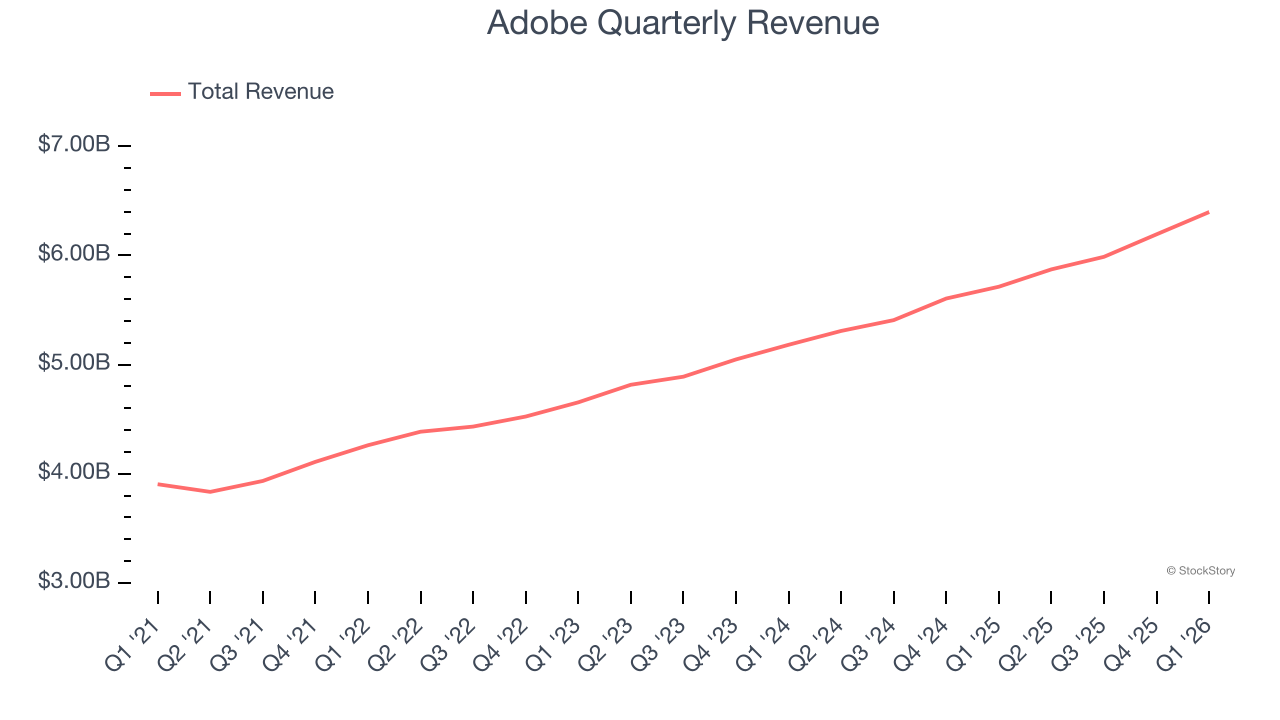
Long-term growth is the most important, but within software, a half-decade historical view may miss new innovations or demand cycles. Adobe’s recent performance shows its demand has slowed as its annualized revenue growth of 10.8% over the last two years was below its five-year trend. We’re wary when companies in the sector see decelerations in revenue growth, as it could signal changing consumer tastes aided by low switching costs. 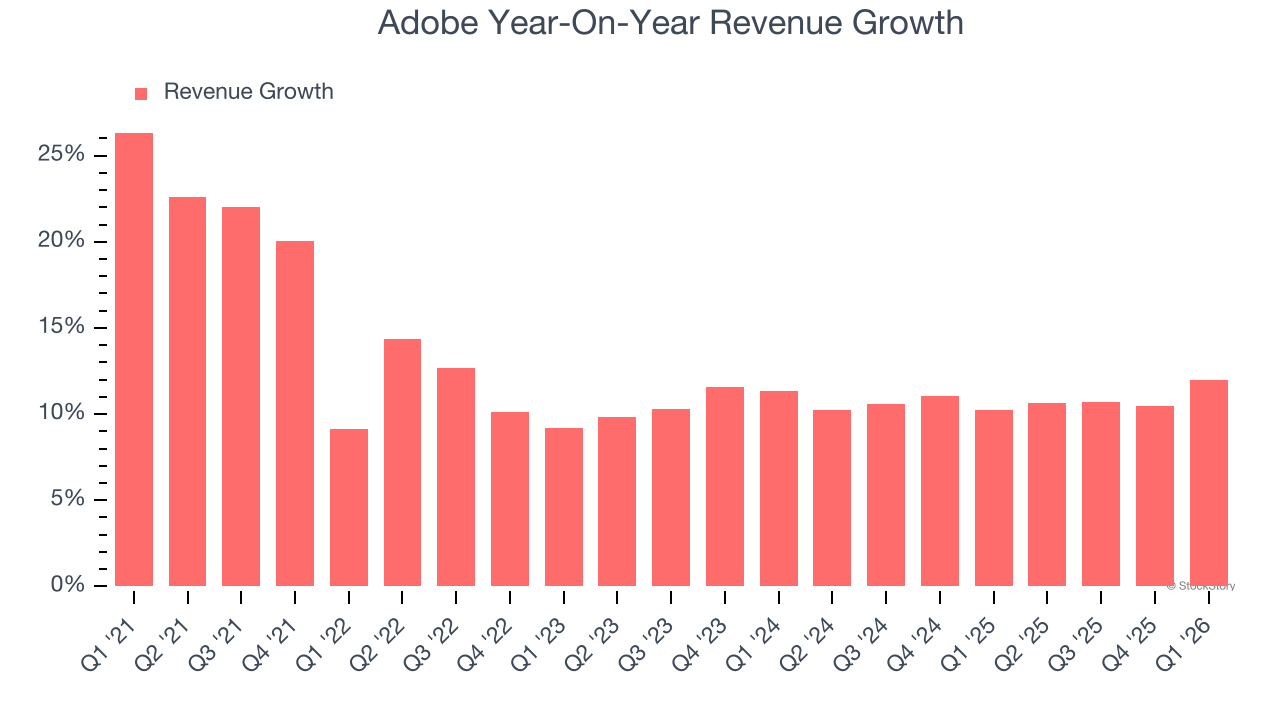
This quarter, Adobe reported year-on-year revenue growth of 12%, and its $6.40 billion of revenue exceeded Wall Street’s estimates by 1.9%. Company management is currently guiding for a 9.9% year-on-year increase in sales next quarter.
Looking further ahead, sell-side analysts expect revenue to grow 8.6% over the next 12 months, a slight deceleration versus the last two years. This projection doesn't excite us and suggests its products and services will see some demand headwinds.
ONE MORE THING: 3 Hidden Platforms Growing 3X Faster than Amazon, Google, and PayPal. Amazon, Google, and Meta all followed the same playbook: Dominate an ignored market. Build an unbeatable moat. Scale until you’re unstoppable.
These three platforms are running that exact playbook right now. The early investors in Amazon made fortunes. The early investors in these could do the same. Get All 3 Stocks Here for FREE.
Annual Recurring Revenue
While reported revenue for a software company can include low-margin items like implementation fees, annual recurring revenue (ARR) is a sum of the next 12 months of contracted revenue purely from software subscriptions, or the high-margin, predictable revenue streams that make SaaS businesses so valuable.
Adobe’s ARR came in at $26.06 billion in Q1, and over the last four quarters, its growth slightly lagged the sector as it averaged 13% year-on-year increases. However, this alternate topline metric grew faster than total sales, which likely means that the recurring portions of the business are growing faster than less predictable, choppier ones such as implementation fees. That could be a good sign for future revenue growth. 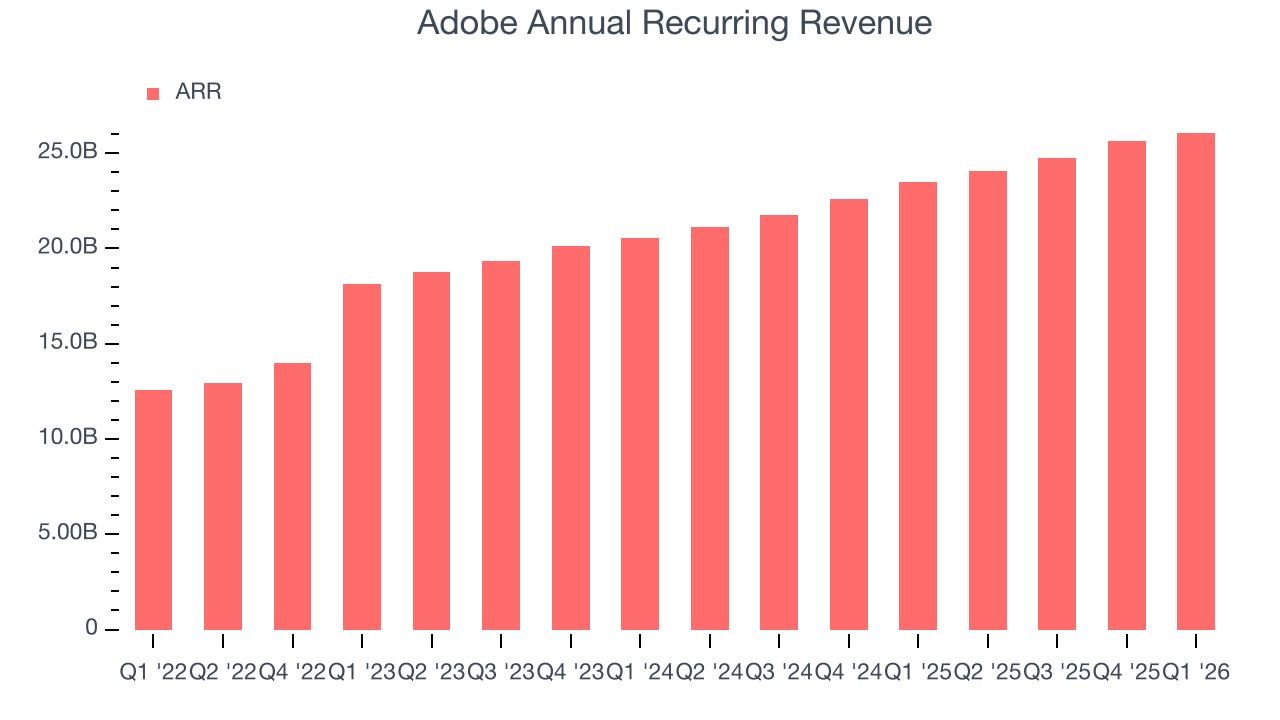
Customer Acquisition Efficiency
The customer acquisition cost (CAC) payback period measures the months a company needs to recoup the money spent on acquiring a new customer. This metric helps assess how quickly a business can break even on its sales and marketing investments.
Adobe is quite efficient at acquiring new customers, and its CAC payback period checked in at 33.5 months this quarter. The company’s rapid recovery of its customer acquisition costs means it can attempt to spur growth by increasing its sales and marketing investments. 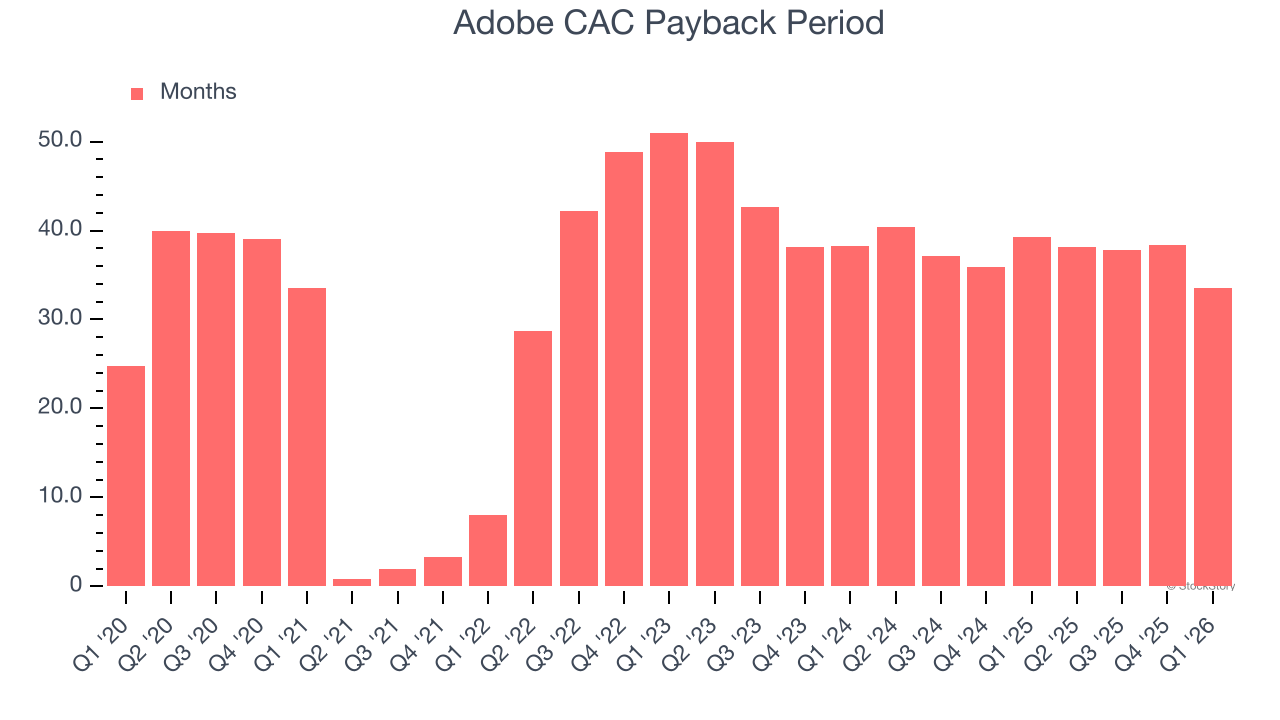
Key Takeaways from Adobe’s Q1 Results
We enjoyed seeing Adobe beat analysts’ billings expectations this quarter. We were also glad its EPS guidance for next quarter exceeded Wall Street’s estimates. Overall, we think this was a solid quarter with some key areas of upside. Investors were likely hoping for more, and shares traded down 6.7% to $252.58 immediately following the results.
Is Adobe an attractive investment opportunity right now? When making that decision, it’s important to consider its valuation, business qualities, as well as what has happened in the latest quarter. We cover that in our actionable full research report which you can read here (it’s free).