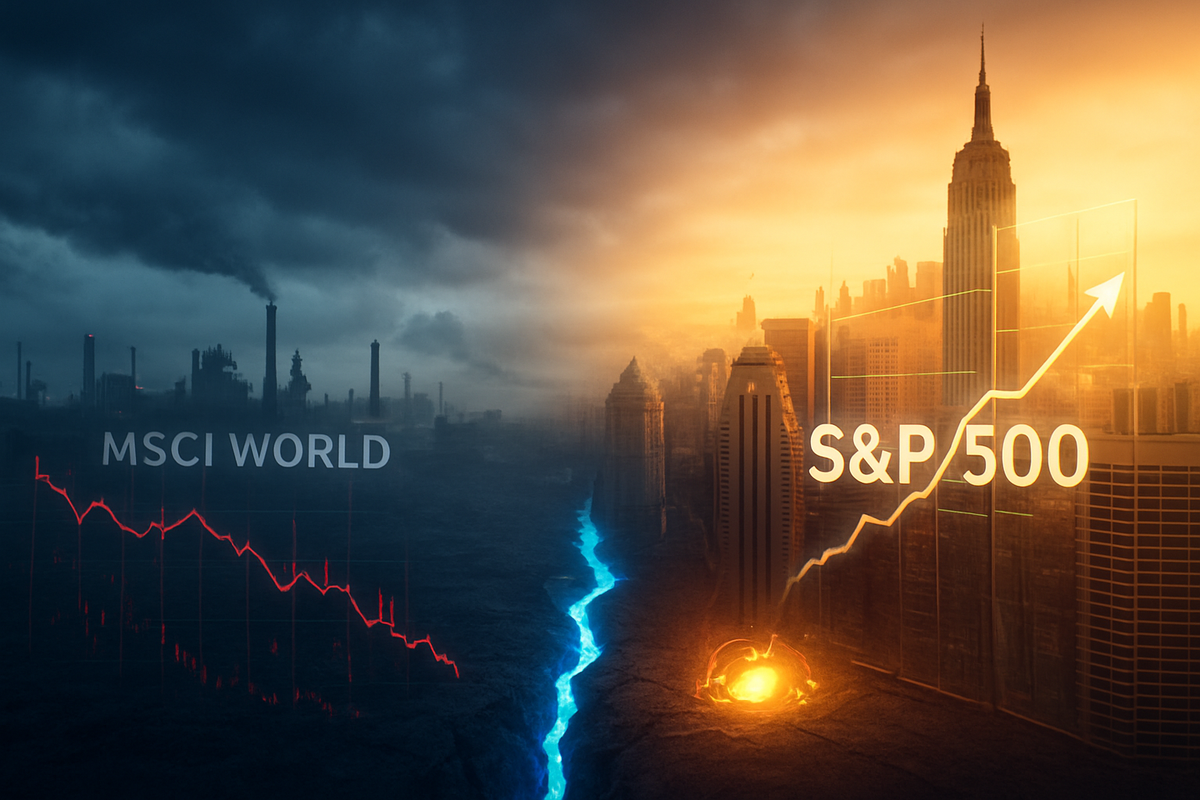
As of mid-March 2026, the financial world is witnessing a historic "Great Decoupling." While the MSCI All Country World Index (ACWI) has spiraled into its steepest decline since the 2022 bear market, dropping nearly 10% in just six weeks, U.S. equities have remained remarkably resilient. This divergence has shattered the long-standing assumption that global markets move in lockstep, revealing a new geopolitical and economic reality where the United States has built a formidable "defensive moat" around its capital markets.
The immediate implications are profound: a massive flight to quality is draining liquidity from European and Asian markets and funneled it back into the "Safety of the Dollar" and U.S. technology infrastructure. For investors, this shift marks the end of the post-pandemic synchronization and the beginning of an era where geographic location and energy security are as critical as balance sheet strength.
A Perfect Storm: Geopolitics, Energy, and the "Warsh Shock"
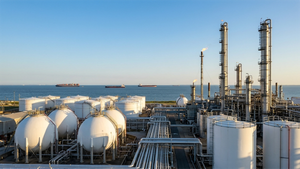
The divergence began to crystallize in late February 2026, following a rapid escalation of military operations involving U.S. and Israeli forces against Iranian infrastructure. The subsequent threat to the Strait of Hormuz—a vital artery handling 20% of the world's oil and liquefied natural gas (LNG)—sent crude prices surging toward $120 per barrel. While the U.S. has maintained a degree of insulation due to its domestic production capabilities, the energy-starved economies of Europe and East Asia were immediately plunged into a stagflationary crisis.
Simultaneously, the domestic U.S. narrative was upended by the nomination of Kevin Warsh to succeed Jerome Powell as Chair of the Federal Reserve (NYSE: FED). The "Warsh Shock" of early 2026 signaled a transition toward "monetary discipline," characterized by a higher-for-longer interest rate environment and aggressive balance sheet reduction. While this hawkish pivot initially rattled U.S. indices, it ultimately strengthened the U.S. Dollar (DXY) to levels not seen in decades, making U.S. Treasury bills and large-cap tech shares the only viable harbor for global capital.
By March 17, 2026, the disparity in performance was jarring. While the S&P 500 (INDEXSP: .INX) had retreated only 5% from its all-time highs and showed signs of stabilization, international benchmarks were in freefall. The South Korean Kospi index dropped 6% in a single week, and the Japanese Nikkei 225 fell 5.2%, as the high cost of energy imports crippled manufacturing margins. In Europe, the CAC 40 and DAX entered correction territory, burdened by the realization that their industrial base remains precariously dependent on volatile global supply chains.
Winners and Losers in a Bifurcated Market
The primary beneficiaries of this divergence have been U.S. energy titans and the "AI Execution" giants. ExxonMobil (NYSE: XOM) and Chevron (NYSE: CVX) have reached all-time high valuations as they reap the rewards of a $60 billion windfall from surging domestic oil prices. Similarly, GE Vernova (NYSE: GEV) has seen its order book for gas turbines and grid infrastructure filled through 2028, as data centers and industrial hubs scramble for reliable, non-imported power sources.
In the technology sector, the narrative has shifted from speculative AI hype to indispensable infrastructure. Microsoft (NASDAQ: MSFT), Nvidia (NASDAQ: NVDA), and Palantir (NASDAQ: PLTR) have functioned as "defensive" assets. These companies provide the essential software and hardware required for the "Technology Sovereignty" movement, where nations and corporations prioritize internal efficiency over global integration. CrowdStrike (NASDAQ: CRWD) has also seen a surge in demand as cyber warfare concerns intensified alongside the Middle East conflict, cementing its role as a mandatory utility for the digital age.
Conversely, the losers are concentrated in energy-intensive international manufacturing and consumer discretionary sectors. The German chemical giant BASF (OTCMKTS: BASFY) has entered a period of extreme stress, with CEO Markus Kamieth warning that Europe is losing industrial capacity at an unprecedented speed due to 50% spikes in natural gas costs. In the automotive world, Toyota (NYSE: TM) and Volkswagen (OTCMKTS: VWAGY) have struggled under the dual weight of logistics bottlenecks in the Strait of Hormuz and declining consumer sentiment in their primary growth markets. Even the semiconductor powerhouse TSMC (NYSE: TSM) has faced headwinds as a global helium shortage, triggered by conflict-related outages in Qatar, threatened its highly sensitive fabrication processes.
The Significance of Energy Security and Monetary Discipline
This market decoupling fits into a broader trend of "Regionalization," where the benefits of globalization are being weighed against the risks of dependency. The 2026 divergence mirrors the 2022 energy crisis but with a critical difference: the U.S. is no longer just a participant in the global economy but a fortress. Its status as a net energy exporter and the leader in generative AI has allowed it to export inflation to its trading partners while retaining the lion's share of productivity gains.
Furthermore, the policy shift at the Federal Reserve marks a historical precedent. For the first time in nearly twenty years, the Fed is signaling a move away from quantitative easing as a default response to volatility. Kevin Warsh’s philosophy of "productivity-led easing" suggests that the Fed will only lower rates if justified by real economic output, rather than market jitters. This has forced global competitors to either follow the U.S. into a high-rate environment—risking a deep recession—or cut rates to save their economies, which would further devalue their currencies against the dollar.
The ripple effects are already being felt by competitors in emerging markets. Countries like Brazil and India, which had previously benefited from a weak dollar, are now facing massive capital outflows as investors chase the 5.5% yields offered by U.S. risk-free assets. This "yield gap" is creating a feedback loop that reinforces U.S. market dominance at the expense of global growth, a phenomenon some analysts are calling "The New Pax Americana of Finance."
Looking Ahead: The "Warsh Fed" and Strategic Pivots
In the short term, the market remains fixated on the confirmation process for the next Fed Chair. If a "Powell Premium" emerges—where Jerome Powell is asked to stay on for an interim period to provide stability—markets may see a relief rally in global equities. However, a full transition to the "Warsh Fed" would likely cement the U.S. dollar's strength for the remainder of 2026. Companies that have not yet diversified their energy sources or localized their supply chains will face an existential threat as the "cost of complexity" continues to rise.
Long-term, we are likely to see a strategic pivot among European and Asian giants toward faster energy diversification. Companies like TotalEnergies (NYSE: TTE) and Shell (NYSE: SHEL) are expected to accelerate their U.S.-based LNG projects to mitigate their exposure to the Middle East. Additionally, we may see the emergence of a "Two-Tiered Global Market," where U.S. assets trade at a permanent "Security Premium" compared to the rest of the world, fundamentally changing how pension funds and institutional investors approach geographic asset allocation.
Final Assessment: A Resilient Fortress in a Volatile World
The 2026 divergence is more than a temporary market anomaly; it is a clear signal that the U.S. has successfully decoupled its economic fate from the vulnerabilities that currently plague its global peers. The combination of energy independence, AI leadership, and a return to monetary discipline has created a unique environment where the S&P 500 can withstand global shocks that would have previously triggered a domestic recession.
As we move forward, investors should watch for any signs of de-escalation in the Middle East, which could provide a "catch-up" opportunity for beaten-down international stocks. However, the structural advantages of the U.S. market appear durable. The key takeaway for the coming months is clear: in a world of rising geopolitical and energy risks, the "Safety of the States" remains the dominant investment thesis. Monitor the confirmation of Kevin Warsh and the stability of the Strait of Hormuz, as these will be the primary bellwethers for whether this decoupling becomes a permanent fixture of the late 2020s.
This content is intended for informational purposes only and is not financial advice.