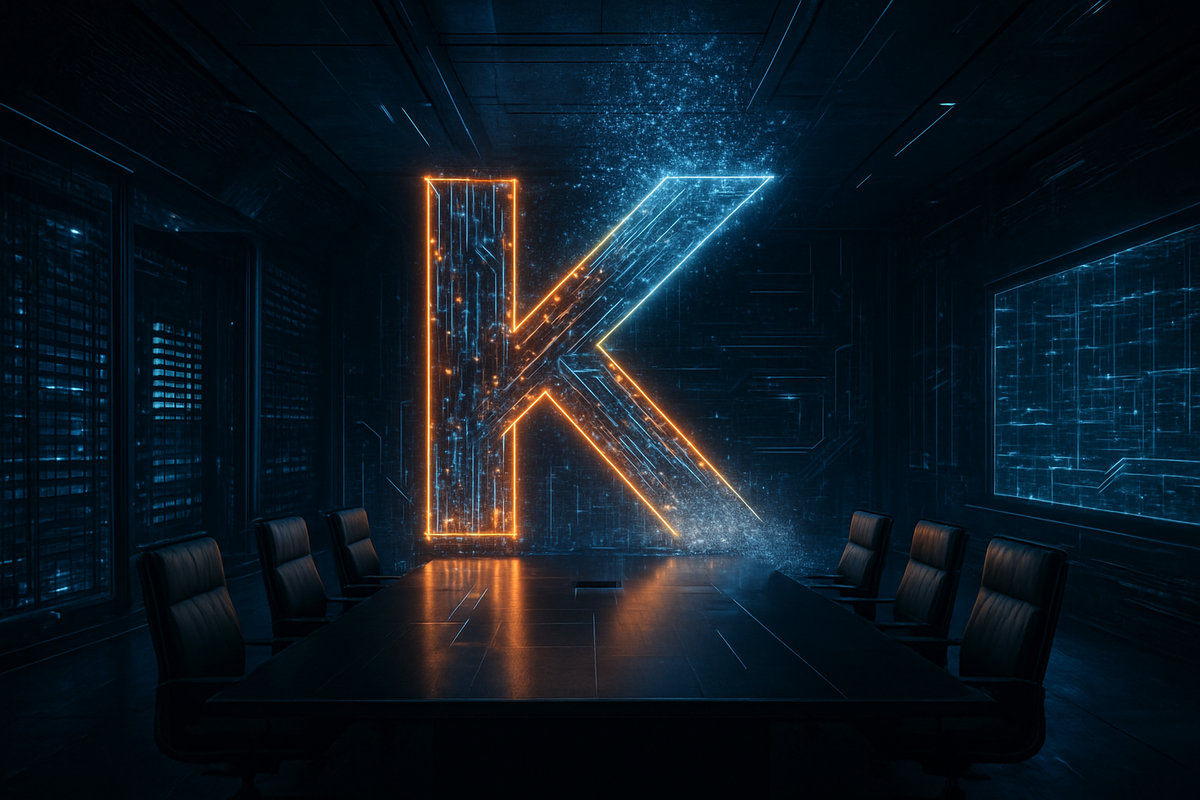
The opening months of 2026 have revealed a startling paradox in the global financial landscape: while the sheer number of corporate marriages is dwindling, the price tags on the few remaining ceremonies have reached atmospheric heights. This "K-shaped" trajectory in Mergers and Acquisitions (M&A) is characterized by a 22% year-over-year decline in total deal volume, yet a massive 57% surge in "megadeals" valued at over $1 billion. This trend marks a fundamental shift from the speculative "spray and pray" venture environment of years past toward a high-stakes era of strategic consolidation and infrastructure dominance.
At the heart of this divergence is a desperate global race for Artificial Intelligence (AI) sovereignty. As the world approaches the midpoint of the decade, the corporate world is no longer satisfied with acquiring software startups or niche algorithms. Instead, the focus has shifted to the "Industrial Phase" of AI—the acquisition of power grids, data center real estate, and vertically integrated hardware. This consolidation is creating a marketplace of "haves" and "have-nots," where the largest tech and energy titans are leveraging massive cash reserves to secure the physical substrate of the future economy, while mid-market firms remain frozen by high financing costs and a lack of strategic scale.
The Return of the Titans: A Surge in Strategic Scale
The first ten weeks of 2026 have seen a flurry of activity that analysts are calling the "Return of the Mega-Merge." In January and February alone, 22 deals exceeding the $1 billion mark were announced, compared to just 14 during the same period in 2025. The most seismic of these occurred in February, when the private aerospace giant SpaceX announced a historic merger with xAI in a deal valuing the combined entity at a staggering $1.25 trillion. While both remain private entities, the ripple effects were felt across every public tech exchange, signaling a new era of vertical integration between satellite internet, space-based compute, and advanced intelligence.
In the public markets, the consolidation of legacy industries has been equally aggressive. Paramount Global (NASDAQ: PARA) made headlines earlier this month by entering a definitive agreement to merge with Warner Bros. Discovery (NASDAQ: WBD) in a $170 billion transaction. This move, aimed at creating a "content cartel" to withstand the encroachment of tech-driven streaming platforms, represents the "survival scale" philosophy currently dominating boardrooms. Simultaneously, the energy sector witnessed a massive $58 billion tie-up between Devon Energy (NYSE: DVN) and Coterra Energy (NYSE: CTRA), as shale producers seek the operational efficiency required to power the massive energy demands of the AI revolution.
Market reactions to these "megadeals" have been largely positive from institutional investors, who view the consolidation as a necessary defense against volatility. However, the 22% drop in overall deal volume—representing a collapse in the $50 million to $500 million transaction range—suggests a thinning of the middle class in the corporate ecosystem. Investment banks that specialize in mid-market volume are facing a "deal desert," while elite bulge-bracket firms are reaping record fees from the handful of multi-billion dollar "transformative" acquisitions.
Winners, Losers, and the Infrastructure Arms Race
The primary beneficiaries of this K-shaped market are the "Hyperscalers" and the firms that provide them with the "bricks and mortar" of AI. Alphabet Inc. (NASDAQ: GOOGL) recently signaled its intent to secure the power-generation layer of the AI stack by acquiring clean energy developer Intersect Power for $4.75 billion. By owning the power source directly, Alphabet bypasses the grid constraints that are currently bottlenecking AI expansion. Similarly, companies like Hewlett Packard Enterprise (NYSE: HPE), which completed its $14 billion acquisition of Juniper Networks in early 2026, are emerging as winners by providing the high-performance networking fabric essential for data-heavy workloads.
Conversely, the "losers" in this environment are the mid-tier software-as-a-service (SaaS) companies and legacy industrial firms that lack the capital to compete for AI infrastructure. These companies are being outbid for talent, hardware, and even electricity. Furthermore, data center Real Estate Investment Trusts (REITs) like Digital Realty (NYSE: DLR) and Equinix (NASDAQ: EQIX) find themselves in a complex position; while demand for their space is at an all-time high, they are increasingly becoming targets for acquisition by private equity giants like BlackRock (NYSE: BLK), which recently partnered with MGX to acquire Aligned Data Centers in a $40 billion deal.
The financial sector is also seeing a divide. Large, well-capitalized institutions like Banco Santander (NYSE: SAN) are using the current environment to snap up regional players, as seen in their $12.2 billion acquisition of Webster Financial. This consolidates market share in a stabilizing interest rate environment, leaving smaller regional banks with fewer options for growth or exit strategies.
The AI Infrastructure Supercycle and Its Global Significance
This shift in M&A strategy reflects a broader industrial trend: the realization that AI is not just a software layer, but a physical one. Analysts estimate that between $5 trillion and $8 trillion will be required over the next five years to build out the global AI infrastructure. This "Supercycle" is driving a convergence of sectors that were previously distinct. When a tech giant like Microsoft (NASDAQ: MSFT) or Amazon (NASDAQ: AMZN) looks to an M&A target, they are no longer just looking for "eyeballs" or "engagement"; they are looking for "gigawatts" and "latency."
The regulatory landscape is also adapting to this new reality. The Federal Trade Commission (FTC) and Department of Justice (DOJ) have expressed heightened scrutiny regarding these megadeals, particularly the "vertical" nature of acquisitions where a company owns both the AI model and the hardware it runs on. However, the historical precedent of the early 20th-century oil and rail consolidations suggests that when a technology becomes a matter of national security, "strategic scale" often outweighs traditional antitrust concerns. The 2026 surge in megadeals suggests that boards are betting on a regulatory "thaw" or, at the very least, a belief that being "too big to fail" is the only way to survive the AI transition.
Furthermore, 2026 marks the first year where AI is being used significantly to facilitate the M&A process itself. Tools for automated due diligence and target screening have reduced the "underwriting" time for multi-billion dollar deals from months to weeks. This speed allows cash-rich firms to move faster than their smaller competitors, further widening the gap in the K-shaped market.
The Road Ahead: Vertical Integration or Monopolization?
As we look toward the remainder of 2026, the short-term focus will likely remain on "energy-for-compute" swaps and further consolidation of the data center ecosystem. We can expect to see more unconventional acquisitions, such as semiconductor companies buying into energy utilities or cloud providers acquiring specialized chip manufacturers. The long-term challenge will be the "agentization" of legacy industries. Companies in healthcare and manufacturing that cannot find a way to integrate their data into the "AI Sovereign" layer will likely become the next wave of acquisition targets—valued more for their data sets than their current revenue streams.
A potential strategic pivot for many firms will be moving away from general-purpose AI and toward "Vertical AI." We may see a surge in M&A activity within specialized fields like biotechnology or materials science. For example, AstraZeneca (NASDAQ: AZN) recently acquired Modella AI, a move that signals how pharmaceutical giants are using M&A to fundamentally transform their R&D processes into AI-driven operations. The challenge for these firms will be navigating the extreme valuations that come with being an "AI-adjacent" asset in a market hungry for growth.
Summary and Investor Outlook
The M&A landscape of 2026 is a study in extremes. The 57% surge in billion-dollar deals demonstrates a "winners-take-all" mentality, while the 22% drop in overall volume highlights the struggles of the broader market. The primary takeaway for investors is that scale has become the ultimate defensive and offensive weapon. The "AI Infrastructure Supercycle" is the engine driving this consolidation, and it shows no signs of slowing down as the global demand for compute power continues to outpace supply.
Moving forward, investors should watch for the regulatory outcomes of the Paramount-Warner and SpaceX-xAI deals, as these will set the precedent for future "megamergers." Additionally, keep a close eye on the "energy-tech" nexus; the next big M&A surprise may come not from Silicon Valley, but from the power generation and cooling sectors. In this K-shaped world, the companies that control the physical foundations of intelligence are the ones likely to define the market for the rest of the decade.
This content is intended for informational purposes only and is not financial advice