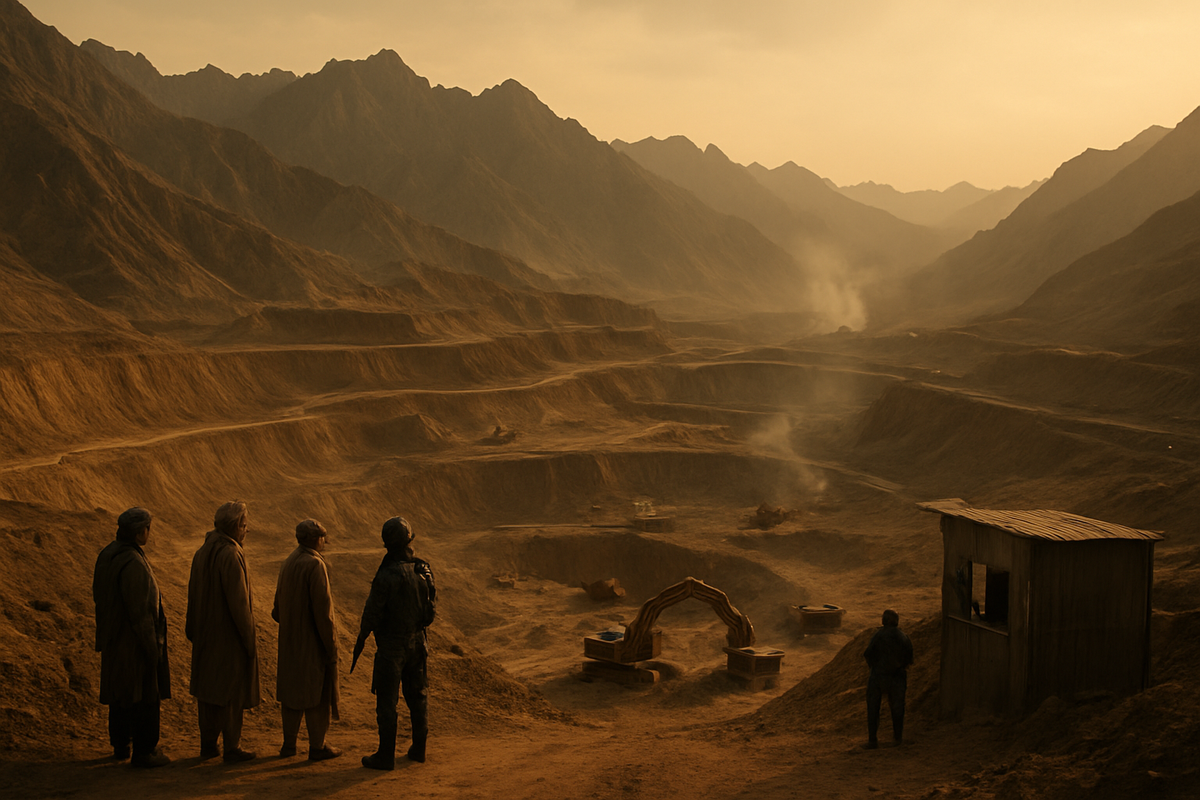
TAKHAR, AFGHANISTAN – A wave of violent unrest has erupted in the mineral-rich mountains of northern Afghanistan, marking a bloody start to 2026 and casting a long shadow over the future of the global gold mining sector's frontier investments. In the first week of January, deadly clashes between local residents and security forces at the Samti gold mine in Takhar province left at least six people dead and dozens wounded, forcing the Taliban’s Ministry of Mines and Petroleum to officially suspend operations as of January 7, 2026. The incident highlights the volatile intersection of environmental degradation, local disenfranchisement, and the high-stakes "New Great Game" for mineral resources.
The immediate implications of the shutdown are ripple effects across the regional gold market. The Samti mine, estimated to hold between 12 and 24 tonnes of gold, was a cornerstone of the Taliban’s efforts to achieve economic self-sufficiency through foreign investment. However, the destruction of mining equipment and the flight of foreign technical staff signify a major setback for the "China-Afghanistan Company," the primary venture behind the project. For the global market, the event serves as a stark reminder that while gold prices remain near record highs, the "geopolitical risk premium" is becoming an increasingly permanent fixture in the valuation of mining assets in unstable jurisdictions.
The Siege of Samti: A Timeline of Escalation
The violence in the Chah Ab district of Takhar province was the culmination of months of simmering tension. In May 2024, the Taliban government awarded a $310 million contract to the China-Afghanistan Company and its local partner, Zarawar Afghanistan Private Company, to exploit a 12-square-kilometer area. By late 2025, however, the project faced mounting criticism from the local population in the Samti and Dara-e-Fazel areas. Residents alleged that the mining operations had contaminated vital drinking water sources and destroyed agricultural land without providing the promised jobs or infrastructure improvements.
The situation reached a breaking point on January 3, 2026, when hundreds of villagers marched on the mining compound. The protest turned into a riot after company guards and Taliban security forces opened fire to prevent the crowd from breaching the main facility. In the ensuing chaos, four residents and two security personnel were killed. Protesters responded by setting fire to heavy machinery, transport vehicles, and staff tents, successfully seizing several key compounds before the Taliban interior ministry dispatched reinforcements.
This event is not an isolated tragedy but part of a broader pattern of instability in the region. In December 2025, a mine collapse in the Zarshoy area of Badakhshan province killed several laborers, drawing international attention to the lack of safety standards. Furthermore, internal factionalism within the Taliban—specifically between the Kandahar-based leadership and the Haqqani network—has led to "shadow wars" over the right to tax these mineral deposits, leaving foreign operators caught in a crossfire of conflicting administrative demands and extortion.
Winners and Losers: The Shifting Landscape of Mining Risk
The clear "losers" in this escalation are the Chinese-backed firms that have spearheaded the push into Afghanistan's mineral sector. The China-Afghanistan Company, alongside other major players like the Metallurgical Corporation of China (HKG: 1618) and Zijin Mining Group (SHA: 601899), now face a crisis of confidence. The suspension of the Samti project and the targeted killing of four Chinese nationals in a related incident in late 2025 have made it nearly impossible to secure the site without a massive, and costly, increase in private security forces. These firms are finding that their "no-strings-attached" investment model is failing to mitigate the grassroots resistance that Western firms often navigate through rigorous ESG (Environmental, Social, and Governance) frameworks.
Conversely, established gold producers in stable jurisdictions stand to benefit from the rising risk premium. As investors flee "blood gold" or high-risk frontier assets, capital is rotating back toward major players with diversified, low-risk portfolios. Companies like Newmont Corporation (NYSE: NEM), Barrick Gold Corporation (NYSE: GOLD), and Agnico Eagle Mines (NYSE: AEM) are likely to see their valuations bolstered as the market places a higher premium on "safe" ounces. These companies, while facing their own inflationary pressures, do not contend with the existential threat of local insurgencies seizing their assets or the sudden suspension of licenses by unrecognized governments.
The Taliban government itself is also a significant loser. The loss of revenue from the Samti mine, combined with a new "mineral-for-tax" system introduced in August 2025—which requires companies to pay taxes in physical gold—is creating a liquidity crunch. The inability to protect foreign workers and ensure supply stability undermines the Taliban's central narrative that they have brought "security" to Afghanistan, potentially deterring future investment from other regional powers like Iran or Russia.
Resource Nationalism and the Rise of the "Safe-Haven" Premium
The events in Afghanistan fit into a broader global trend of resource nationalism and the increasing difficulty of bringing new supply online. From the protests against First Quantum Minerals (TSX: FM) in Panama to the ongoing disruptions in the African Copperbelt, the mining industry is grappling with a world where local communities are more empowered and less willing to trade their environment for a fraction of the mineral wealth. The Afghan clashes are an extreme example of this trend, where the lack of a democratic outlet for grievances leads directly to armed conflict.
Furthermore, the regional tensions between Afghanistan and Tajikistan have added a layer of complexity. In late 2025, Tajikistan officially protested Chinese mining activities in the Panj River channel, claiming the redirection of the river caused flooding on the Tajik side of the border. This "water-mineral nexus" is becoming a flashpoint for conflict across Central Asia, suggesting that the supply stability of gold and other critical minerals is now tied to transboundary water rights and regional diplomacy.
Historically, such events have led to a permanent "frontier discount" for assets in the region. Much like the "conflict diamond" era of the 1990s, the gold market in 2026 is increasingly bifurcated. Refiners and institutional investors are under mounting pressure to prove that their gold is not funding the Taliban’s internal power struggles or being extracted through the violent displacement of local populations. This regulatory shift, spearheaded by the EU and North American trade bodies, may soon lead to a price gap between "certified ethical gold" and "untracked bullion."
What Comes Next: Security Costs and Strategic Pivots
In the short term, the gold mining sector in Afghanistan will likely enter a period of deep freeze. Foreign companies will be required to fund "border battalions"—effectively private militias—to protect their assets, a cost that may render many projects economically unviable even at $2,500/oz gold. We can expect the Taliban to attempt a "security-first" crackdown in the northern provinces, which could inadvertently fuel a wider local insurgency, turning mining sites into permanent battlegrounds.
For the global market, the strategic pivot will involve a renewed focus on "onshoring" and "friend-shoring" of mineral supplies. If the Afghan "gold rush" stalls, the pressure to develop deposits in North America, Australia, and Northern Europe will intensify. Investors should watch for a surge in exploration permits and M&A activity in these regions as the industry seeks to de-risk its supply chains. The potential for a "mineral-for-tax" model to spread to other cash-strapped nations is also a scenario that analysts are beginning to model, which would further complicate the logistics and transparency of the global gold trade.
The Investor’s Takeaway: A New Era of Scrutiny
The deadly clashes in Takhar are a sobering reminder that the "cost of production" for gold is no longer just about fuel and labor; it is about the social license to operate. The suspension of the Samti mine is a significant blow to the global supply of "new" gold, contributing to a tightening market that supports higher long-term prices. However, the human and geopolitical cost of these ounces is becoming too high for many institutional players to ignore.
Moving forward, the market will likely reward companies that can demonstrate absolute security of tenure and ethical sourcing. Investors should keep a close eye on the "ESG premium" and be wary of companies with high exposure to frontier markets where the rule of law is replaced by the rule of the gun. In the coming months, the focus will be on whether the Taliban can restore enough order to resume operations, or if the Samti mine will become a monument to the perils of the modern resource race. For now, the message from the mountains of Afghanistan is clear: the path to the world's most precious metal is becoming increasingly fraught with peril.
This content is intended for informational purposes only and is not financial advice.