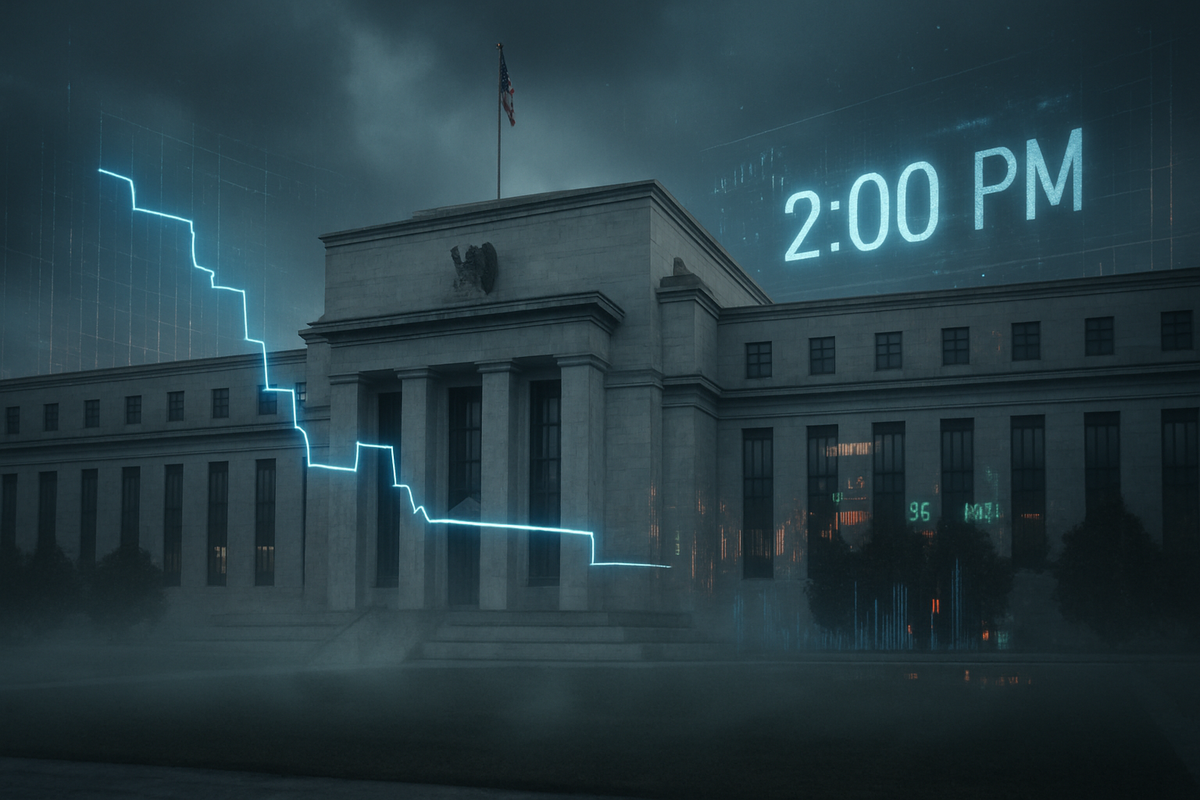
As the clock struck 2:00 PM in Washington D.C. today, January 28, 2026, the Federal Open Market Committee (FOMC) concluded its first policy meeting of the year with a decision that many expected but few found comforting. In a 10-2 vote, the Federal Reserve elected to maintain the federal funds rate at a target range of 3.5% to 3.75%. This "cautious pause" follows a late-2025 flurry of rate cuts, signaling that the central bank is prepared to hunker down as it grapples with a resurging "inflation fog" and a massive federal government shutdown that has left economic data in shambles.
The decision marks a pivot from the aggressive easing seen in the final quarter of 2025. With headline inflation stubbornly stuck at 2.7% and new tariff-related cost pressures beginning to ripple through the supply chain, Fed Chair Jerome Powell and his colleagues have opted for a "wait-and-see" approach. For investors, the move confirms that the road to a "soft landing" remains treacherous, as the central bank balances a cooling labor market against the threat of a second wave of price increases.
A "Foggy" Decision: The 10-2 Hold and the Data Gap
The January 27-28 meeting was characterized by a rare level of internal dissent and external uncertainty. While the majority of the committee voted to hold rates steady, Governors Stephen Miran and Christopher Waller broke ranks, dissenting in favor of a 25-basis-point cut. This internal friction reflects the "mixed bag" of economic signals currently plaguing policymakers. The late-2025 government shutdown created significant data gaps, with officials effectively "driving in fog" without the usual clarity provided by timely Bureau of Labor Statistics reports.
Leading up to the January 17 blackout period, the final round of Fed commentary set a somber tone. Chair Jerome Powell, in a defiant January 11 speech, defended the Fed’s independence against rising political pressure, making it clear that the central bank would not be bullied into further cuts until the 2% inflation target was more firmly in sight. This was echoed by New York Fed President John Williams, who warned on January 12 that inflation might actually peak near 3% in the first half of 2026 due to the delayed impact of new trade tariffs.
The immediate market reaction to today's announcement was a localized spike in volatility. Bond yields initially rose as the "hawkish hold" dashed hopes for a March cut, while the S&P 500 Index fluctuated near the 6,900 mark. Market participants had largely priced in this hold—with the CME FedWatch Tool showing a 99% probability of no change—but the hawkish tone of the FOMC statement, which highlighted "persistent core price pressures," caught some traders off guard.
Winners and Losers in a "Higher-for-Longer" 2026
The Fed's decision to pause creates a bifurcated landscape for public companies. Major financial institutions, such as JPMorgan Chase & Co. (NYSE: JPM) and The Goldman Sachs Group Inc. (NYSE: GS), stand to benefit from a sustained net interest margin (NIM) environment. With the Fed holding rates at 3.5%–3.75% rather than continuing the slide toward 3%, these banks can maintain higher yields on loans while the cost of deposits begins to stabilize. Conversely, Barclays PLC (NYSE: BCS) analysts have noted that the "cautious pause" could lead to a slowdown in investment banking activity as corporations defer large-scale refinancing in hopes of lower rates later this year.
On the losing side, interest-rate-sensitive sectors like real estate are feeling the heat. Prologis (NYSE: PLD), a bellwether for industrial real estate, may see a cooling in valuation expansions as the "cost of carry" remains higher than many had projected during the December rally. Furthermore, high-growth technology firms, often proxied by the likes of Apple Inc. (NASDAQ: AAPL), may face valuation headwinds. While Apple’s massive cash reserves insulate it from borrowing costs, the broader tech sector’s reliance on future earnings discounted at today's rates makes the Fed’s pause a bitter pill to swallow for growth investors.
The retail sector also faces a double-edged sword. While the pause may help stabilize the dollar, the underlying inflation mentioned in the Fed's statement—driven by tariffs—suggests that companies with international supply chains will soon face a choice: absorb higher costs or pass them on to an already weary consumer. This dynamic puts a spotlight on the "cost pressures" noted in the January Beige Book, which highlighted that firms are increasingly passing tariff expenses to the public.
The Global Context: Tariffs, Transitions, and Trends
The Federal Reserve’s current stance cannot be viewed in isolation from the broader geopolitical and fiscal shifts occurring in early 2026. The looming expiration of Jerome Powell’s term in May 2026 has introduced a layer of "lame duck" anxiety into the markets. Discussions are already swirling about potential successors like Kevin Warsh, and the Fed's current caution may be an attempt to provide a stable hand-off in a highly charged political environment.
This meeting also highlights a significant historical comparison to the "stop-go" inflation of the 1970s. By holding rates steady now, the Fed is attempting to avoid the mistake of easing too early only to see inflation roar back. The impact of tariffs, a consistent theme in the most recent Beige Book, serves as a new variable that wasn't as prevalent in previous cycles. As John Williams suggested, these fiscal policies could push the 2% inflation goal out to early 2027, forcing the Fed to remain restrictive even as the labor market softens.
Furthermore, the potential for another government shutdown on January 30, 2026, adds a layer of fiscal risk. If the government closes its doors again, the Fed will be forced to make its March decision with even less visibility. This "data vacuum" is a major concern for institutional investors who rely on Fed transparency to hedge their positions.
Looking Ahead: The Road to March and Beyond
In the short term, all eyes move toward the February labor and inflation prints—assuming the government remains open to provide them. If the unemployment rate, which sat at 4.4% in December, continues to creep upward toward 5%, the pressure on the Fed to resume cuts in March will become immense, regardless of "sticky" inflation. However, the current consensus among major banks is shifting. J.P. Morgan now projects that the Fed may hold steady at current levels for the entirety of 2026, a significant departure from the "rate-cut fever" that dominated the markets just three months ago.
Strategically, companies will need to adapt to a "neutral" interest rate that is significantly higher than the zero-bound era of the previous decade. This will require a focus on balance sheet health and organic growth rather than cheap-debt-fueled acquisitions. For investors, the next few months will be a period of "regime discovery," as the market determines whether 3.5% is the new floor or merely a pitstop on the way to further easing.
Summary: A Tense Stability
The January 2026 FOMC meeting has confirmed that the "easy" part of the inflation fight is over. By choosing to hold rates steady, the Fed has signaled that it prioritizes price stability over immediate labor market relief, even in the face of political headwinds and data uncertainty. The 10-2 vote showcases a growing divide within the committee that will likely only widen as the May leadership transition approaches.
For the market, moving forward means navigating a landscape where the "Fed put" is no longer a guarantee. Investors should closely watch for the February CPI release and any updates on the January 30 fiscal deadline. The "cautious pause" is now the official policy, and until the "fog" of the 2025 shutdown clears, the Federal Reserve appears content to stay the course, leaving the market to wonder if they are standing on solid ground or the edge of a precipice.
This content is intended for informational purposes only and is not financial advice.