On this Wednesday, February 11, 2026, the global eyes of the energy transition are fixed squarely on Albemarle Corporation (NYSE: ALB). Following the release of its fourth-quarter 2025 earnings report this afternoon, the Charlotte-based specialty chemicals giant finds itself at a critical juncture. After weathering the brutal lithium "winter" of 2023 and 2024—a period characterized by a 90% collapse in lithium prices and aggressive belt-tightening—Albemarle’s latest numbers suggest the "Lithium King" is finally emerging from the frost.
As the largest provider of lithium for electric vehicle (EV) batteries, Albemarle's performance is often viewed as a proxy for the health of the entire green energy sector. Today’s report is more than just a balance sheet update; it is a progress report on a massive strategic pivot toward capital discipline, domestic supply chain security, and a diversification into stationary energy storage. With lithium prices stabilizing and a leaner operational structure, ALB is once again a lightning rod for investor debate.
Historical Background
Albemarle’s journey to the top of the chemical world began far from the lithium salars of South America. Founded in 1887 as a paper manufacturing company in Richmond, Virginia, the firm spent its first century as a diversified industrial player. It wasn't until the mid-20th century that the company began aggressively expanding into specialty chemicals, including bromine and catalysts.
The most transformative moment in Albemarle's history occurred in 2015 with the $6.2 billion acquisition of Rockwood Holdings. This move was a masterstroke of foresight, handing Albemarle control over world-class lithium assets, including the Silver Peak mine in Nevada—the only operating lithium mine in the U.S.—and a 49% stake in the massive Greenbushes mine in Australia. Over the next decade, Albemarle shed its non-core assets to lean into the EV revolution, rebranding itself as the essential backbone of the global battery supply chain.
Business Model
Albemarle operates a vertically integrated model designed to capture value from the ground to the battery-grade chemical. Its operations are currently divided into three primary segments:
- Energy Storage (Lithium): This is the heart of the company, accounting for roughly 80% of its valuation. ALB mines lithium from brine (Chile) and hard rock (Australia) and processes it into lithium carbonate and hydroxide.
- Specialties (Bromine): A high-margin, stable business that acts as Albemarle's "cash cow." Bromine is used in flame retardants, electronics, and oil/gas drilling. This segment provides the steady cash flow needed to fund the highly cyclical lithium side of the house.
- Ketjen (Catalysts): Formerly a fully-owned segment, Albemarle transitioned its catalyst business into a 49%-owned joint venture in late 2025. This move allowed the company to keep a foot in the refinery and petrochemical technology market while offloading the heavy capital expenditures required to maintain those industrial plants.
Stock Performance Overview
The last five years have been a roller coaster for ALB shareholders. In late 2022, the stock reached an all-time high of approximately $330 as lithium prices hit record levels. However, as the market became oversupplied and EV demand growth slowed in 2023 and 2024, the stock plummeted, bottoming out near $85 in early 2025.
Over the past 12 months, the stock has staged a remarkable recovery, gaining nearly 100% to trade in the $165–$175 range. While still far from its 2022 peak, the performance reflects a "return to normalcy." On a 10-year horizon, ALB remains a standout performer, having outperformed the S&P 500's materials sector significantly, driven by the structural shift toward electrification. Today’s post-earnings movement suggests that the market is finally rewarding the company's focus on cost-cutting rather than just raw volume.
Financial Performance
In the Q4 2025 results released today, Albemarle reported revenue of $1.34 billion. While this represents a slight decline year-over-year due to lower average realized lithium prices compared to the previous cycle's highs, it beats the bearish estimates from earlier in 2025.
Key financial highlights include:
- Adjusted EPS: A loss of ($0.54), which was narrower than the ($0.62) some analysts feared.
- Cost Savings: The company confirmed it hit a $450 million annual cost-saving run rate, exceeding its initial $400 million target.
- Capital Expenditure: Capex for 2025 was tightly controlled at $650 million, a 60% reduction from the 2024 peak.
- Liquidity: The company maintains a strong liquidity position of $1.8 billion, ensuring it can fund its current projects without returning to the equity markets in the near term.
Leadership and Management
CEO Kent Masters has become the architect of Albemarle’s "Survival and Scale" strategy. Since taking the helm in 2020, Masters has been praised for his transparency and his willingness to make hard choices during the 2024 downturn. Unlike competitors who continued to burn cash, Masters halted high-cost projects and focused on "Tier-1" assets—those with the lowest production costs.
The management team’s recent decision to JV the Ketjen catalyst segment and focus exclusively on Energy Storage and Specialties is seen by governance experts as a disciplined move to simplify the company’s investment thesis. Masters has successfully navigated the "goldilocks" path: cutting enough to save the balance sheet without cutting so much that the company misses the next demand wave.
Products, Services, and Innovations
Albemarle isn't just a mining company; it's a materials science firm. Its primary products, lithium carbonate and lithium hydroxide, are refined to "battery grade," requiring extreme purity levels.
- Lithium Hydroxide: Albemarle is a leader in hydroxide, which is preferred for high-nickel, long-range EV batteries.
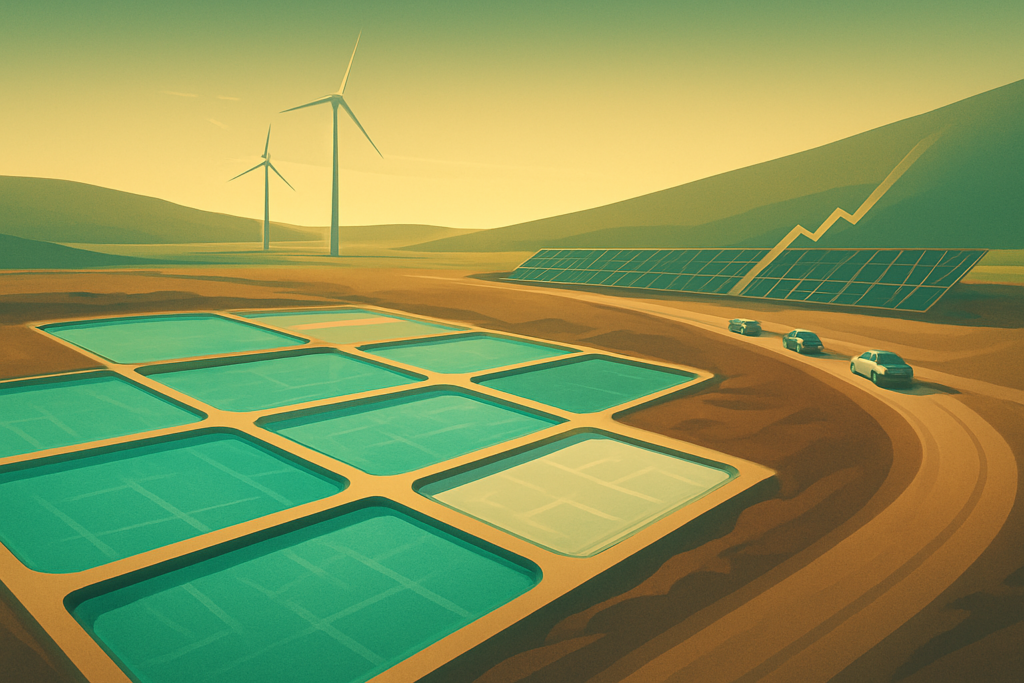
- Salar Yield Improvement: A major innovation being watched in 2026 is Albemarle’s proprietary direct lithium extraction (DLE) and yield-improvement technologies in Chile, which aim to extract more lithium from the same amount of brine with less water usage.
- Kings Mountain: The company is currently testing innovative processing techniques for its Kings Mountain mine in North Carolina, which aims to be one of the most sustainable and technologically advanced hard-rock mines in the world when it reaches full scale.
Competitive Landscape
The competitive landscape shifted dramatically in 2025. For years, Albemarle’s main rivals were Sociedad Química y Minera (NYSE: SQM) and Ganfeng Lithium. However, the 2025 acquisition of Arcadium Lithium by Rio Tinto (NYSE: RIO) changed the game. Albemarle now competes against a diversified mining giant with a massive balance sheet.
While Rio Tinto offers scale, Albemarle retains its advantage in specialization and deep customer relationships with OEMs like Ford and Tesla. In the bromine space, Albemarle continues to hold a near-monopolistic position alongside ICL Group, giving it a stable earnings floor that pure-play lithium miners lack.
Industry and Market Trends
The lithium market in early 2026 is no longer solely about passenger EVs. Three major trends are driving the "Second Wave" of demand:
- BESS (Battery Energy Storage Systems): As utility companies globally shift to solar and wind, the need for massive lithium-ion storage farms has skyrocketed, creating a new, less-cyclical demand source for lithium carbonate.
- AI Data Centers: The explosion of AI has led to massive data center construction. These facilities require uninterruptible power supplies (UPS), and many are switching from lead-acid to higher-performing lithium-ion backups.
- The Rise of LFP: Lithium Iron Phosphate (LFP) batteries are gaining market share globally. Albemarle has successfully pivoted its processing capacity to support both high-nickel and LFP chemistries.
Risks and Challenges
Despite the recovery, Albemarle faces significant headwinds:
- China Exposure: Approximately 45% of Albemarle’s sales are linked to the Chinese spot market. Economic volatility in China or a renewed trade war could disrupt pricing.
- Geopolitical Risk in Chile: Chile’s "National Lithium Strategy" continues to create uncertainty. While Albemarle’s current contract runs through 2043, negotiations regarding state-led joint ventures remain a long-term shadow over its lowest-cost assets.
- Alternative Chemistries: The potential for sodium-ion or solid-state batteries to reduce lithium intensity remains a long-tail risk, though most experts believe lithium will remain the dominant medium for at least the next decade.
Opportunities and Catalysts
The primary catalyst for 2026 is the Kings Mountain Mine. As a domestic, U.S.-based source of lithium, Kings Mountain is eligible for significant government incentives under the Inflation Reduction Act (IRA). Any progress toward full-scale production here is viewed by the market as a "derisking" event for Albemarle’s supply chain.
Additionally, if lithium prices break above the $20,000/tonne level—which some analysts predict for late 2026 as the supply glut fully clears—Albemarle’s massive operational leverage would likely result in an exponential jump in free cash flow.
Investor Sentiment and Analyst Coverage
Wall Street sentiment has turned "cautiously bullish" in early 2026. After a wave of downgrades in 2024, major firms like Goldman Sachs and J.P. Morgan have upgraded the stock to "Buy" or "Overweight," citing the success of the cost-cutting program.
Hedge fund data shows a significant "accumulation" phase occurring throughout Q4 2025. Institutional investors are betting that the bottom is firmly in and that Albemarle is the safest way to play the eventual commodity rebound. Retail sentiment remains mixed, as many small investors were burned during the 2023 crash, but chatter on social platforms has begun to shift toward the "AI data center" lithium play.
Regulatory, Policy, and Geopolitical Factors
Government policy is perhaps the most significant tailwind for Albemarle. The U.S. government’s push for "Friend-shoring" and domestic mineral security has made Albemarle a strategic asset. The company has received hundreds of millions in grants and loans for its domestic processing and mining facilities.
In Europe, the Critical Raw Materials Act is providing similar support for Albemarle’s refining operations. However, this is balanced by the rising tide of "resource nationalism" in South America and parts of Africa, which may make future M&A more expensive and complicated.
Conclusion
As of February 11, 2026, Albemarle stands as a leaner, more disciplined version of the company that entered the 2023 crisis. Today’s earnings report confirms that the management has successfully navigated a period of extreme volatility, bringing the company back to a point where it can generate positive free cash flow even at moderate lithium prices.
For investors, Albemarle represents a high-quality "pure play" on the electrification of the global economy. While risks regarding Chinese demand and Chilean politics remain, the company’s Tier-1 assets and dominant market share make it the indispensable titan of the sector. The road ahead will likely remain cyclical, but with the 2025 recovery now in the rearview mirror, Albemarle looks well-positioned for the next decade of energy transition growth.
This content is intended for informational purposes only and is not financial advice.