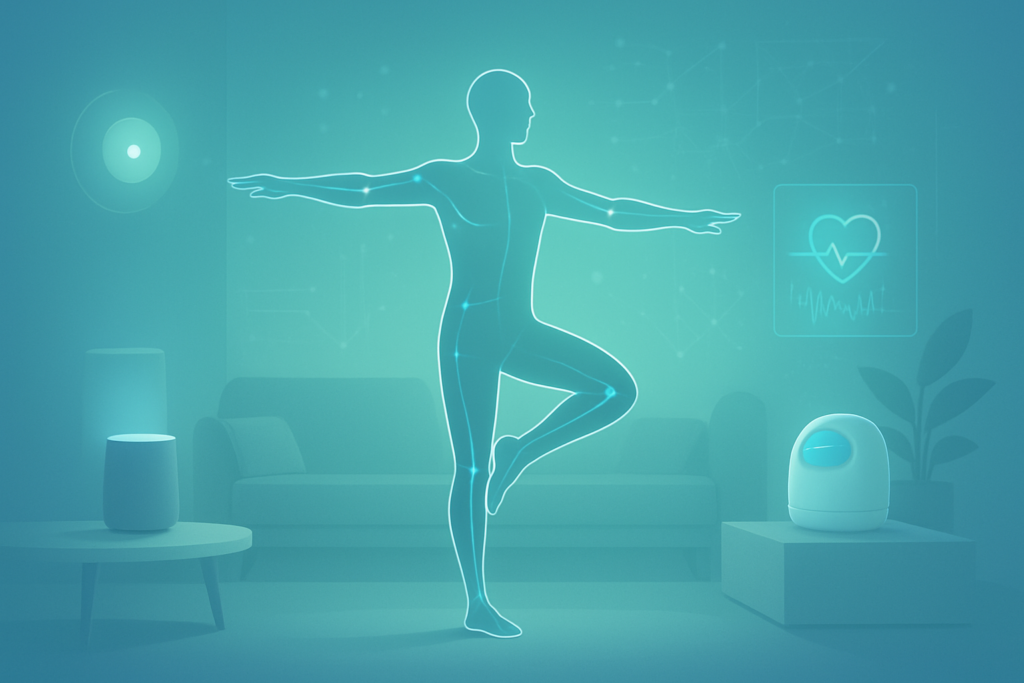
The landscape of healthcare is undergoing a profound transformation, propelled by the innovative integration of artificial intelligence (AI) and wearable sensor technologies. This synergistic combination is particularly making waves in home-based care, offering unprecedented advancements in balance training and physical therapy. By bringing sophisticated monitoring, personalized feedback, and adaptive exercise programs directly into patients' homes, these technologies are enhancing accessibility, personalizing treatment, and significantly improving the effectiveness of rehabilitation and preventive care.
This paradigm shift holds immediate and far-reaching significance for both patients and the broader healthcare industry. For individuals, it means greater convenience, enhanced engagement, and potentially faster, more effective recovery from injuries or conditions affecting mobility and balance. For the healthcare system, it promises optimized workflows, data-driven decision-making, expanded reach to underserved populations, and a crucial pivot towards proactive and preventive care models, ultimately leading to better patient outcomes and more efficient resource utilization.
The Technical Core: Smart Sensors, Adaptive Algorithms, and Real-time Guidance
The technical prowess behind this revolution lies in the sophisticated interplay of advanced wearable sensors and intelligent AI algorithms. These systems are designed to meticulously track, analyze, and respond to human movement, offering a level of precision and personalization previously unattainable outside specialized clinical settings.
Specific AI advancements in this domain include machine learning models that interpret complex sensor data from devices like accelerometers, gyroscopes, and even smart insoles. For instance, University of Michigan researchers have developed AI models capable of predicting how a physical therapist would rate a patient's balance exercise performance using just four wearable sensors. This allows for AI-assisted feedback at home, guiding patients on correct form and technique in real-time. Companies like SWORD Health and Kaia Health are at the forefront, utilizing wireless motion trackers or smartphone cameras combined with AI to provide instant, voice-guided or video-based feedback, ensuring optimal exercise execution and adapting programs on the fly. These AI systems differ significantly from previous approaches, which often relied on subjective patient reporting, infrequent in-person assessments, or rudimentary tracking tools. The key differentiator is the AI's ability to provide objective, continuous, and adaptive feedback, learning from each patient's unique movement patterns and progress. This move from generic, static exercise prescriptions to dynamic, personalized regimens marks a critical evolution. Initial reactions from the AI research community and industry experts are overwhelmingly positive, highlighting the potential for these technologies to democratize access to high-quality rehabilitation and significantly improve patient adherence and outcomes, particularly in fall prevention for older adults.
Corporate Impact: A New Frontier for Tech Giants and Specialized Startups
The burgeoning field of AI-powered home healthcare presents a significant growth opportunity, attracting both established tech giants and innovative startups, poised to reshape the competitive landscape. Companies like Google (NASDAQ: GOOGL) and Apple (NASDAQ: AAPL), with their extensive experience in wearable technology (e.g., Apple Watch, Fitbit) and AI development, stand to benefit immensely. Their existing ecosystems, data collection capabilities, and consumer trust provide a strong foundation for integrating advanced health monitoring and rehabilitation features.
Beyond the tech behemoths, specialized healthcare AI startups are rapidly carving out their niches. Companies like SWORD Health, Kaia Health, and Hinge Health are prime examples, focusing specifically on digital physical therapy and musculoskeletal care. These companies are leveraging AI to deliver scalable, home-based rehabilitation solutions that directly compete with traditional in-person therapy models. Their agile development cycles and deep focus on healthcare-specific challenges allow them to innovate rapidly. This development poses a potential disruption to existing physical therapy clinics and traditional healthcare providers, pushing them to adopt similar technologies or risk losing market share. The competitive implications are clear: companies that can effectively integrate AI, wearable sensors, and user-friendly interfaces to deliver demonstrable patient outcomes will gain significant strategic advantages and market positioning. Partnerships between tech giants and specialized startups, or acquisitions, are also likely as the market matures.
Wider Significance: A Leap Towards Proactive, Personalized Health
The integration of AI and wearable sensors into home-based balance training and physical therapy represents more than just a technological upgrade; it signifies a pivotal shift in the broader AI landscape and healthcare trends. This development perfectly aligns with the growing emphasis on preventive care, remote patient monitoring, and personalized medicine.
Its impacts are manifold: it dramatically improves access to care for individuals in rural areas or those with mobility limitations, reduces the overall cost of healthcare by minimizing clinic visits and hospitalizations, and empowers patients to take a more active role in their recovery. Continuous monitoring and AI-driven predictive analytics enable early detection of health deterioration and fall risks, transforming healthcare from a reactive to a proactive model. However, potential concerns include data privacy and security, ensuring equitable access to these technologies across socioeconomic strata, and the need for robust regulatory frameworks to validate the efficacy and safety of AI-driven therapeutic interventions. Comparisons to previous AI milestones, such as the development of diagnostic AI in radiology or AI-powered drug discovery, highlight this as another critical step in AI's journey from specialized applications to integrated, everyday solutions that directly enhance human well-being and independence.
Future Developments: Smarter Systems and Holistic Health Integration
The trajectory for AI and wearable sensors in home-based healthcare points towards even more sophisticated and integrated solutions. In the near term, we can expect advancements in multimodal sensor fusion, combining data from various sources (e.g., motion, heart rate, skin conductance, even environmental factors) to create a more holistic understanding of a patient's condition and progress. AI algorithms will become even more adaptive, offering real-time adjustments that are indistinguishable from a human therapist's guidance.
Long-term developments include the seamless integration of these rehabilitation platforms with broader electronic health records (EHRs) and other smart home devices, creating a truly connected health ecosystem. This could lead to AI assistants that not only guide exercises but also provide nutritional advice, medication reminders, and mental wellness support, all tailored to an individual's specific needs and health goals. Challenges that need to be addressed include improving the accuracy and reliability of sensor data in diverse home environments, ensuring user-friendliness for all age groups, and developing robust ethical guidelines for data collection and AI decision-making. Experts predict that AI will increasingly move beyond mere assistance to become an indispensable partner in managing chronic conditions and promoting healthy aging, fundamentally redefining the relationship between individuals and their healthcare.
A New Horizon for Independent Living and Proactive Health
The advent of AI and wearable sensors in home-based balance training and physical therapy marks a significant milestone in AI history, ushering in an era of unprecedented accessibility, personalization, and effectiveness in rehabilitation. The key takeaways are clear: these technologies are empowering patients with tools for self-management, reducing healthcare costs, and enabling a proactive approach to health that can prevent falls and improve quality of life.
This development's significance lies in its potential to democratize high-quality care, making advanced therapeutic interventions available to anyone with an internet connection and the necessary devices. It underscores AI's growing role as an enabler of independent living and a critical component in addressing the challenges of an aging global population. In the coming weeks and months, watch for continued innovation from both established tech players and agile startups, further validation through clinical trials, and the expansion of these services into broader areas of home health. The future of healthcare is increasingly at home, intelligent, and deeply personal.
This content is intended for informational purposes only and represents analysis of current AI developments.
TokenRing AI delivers enterprise-grade solutions for multi-agent AI workflow orchestration, AI-powered development tools, and seamless remote collaboration platforms.
For more information, visit https://www.tokenring.ai/.