Off-price retail company Ross Stores (NASDAQ: ROST) beat Wall Street’s revenue expectations in Q4 CY2025, with sales up 12.2% year on year to $6.64 billion. Its GAAP profit of $2 per share was 4.9% above analysts’ consensus estimates.
Is now the time to buy Ross Stores? Find out by accessing our full research report, it’s free.
Ross Stores (ROST) Q4 CY2025 Highlights:
- Revenue: $6.64 billion vs analyst estimates of $6.43 billion (12.2% year-on-year growth, 3.2% beat)
- EPS (GAAP): $2 vs analyst estimates of $1.91 (4.9% beat)
- Adjusted EBITDA: $820.8 million vs analyst estimates of $905.6 million (12.4% margin, 9.4% miss)
- EPS (GAAP) guidance for the upcoming financial year 2026 is $7.19 at the midpoint, in line with analyst estimates
- Operating Margin: 12.3%, in line with the same quarter last year
- Free Cash Flow Margin: 13.9%, up from 11.4% in the same quarter last year
- Locations: 2,267 at quarter end, up from 2,186 in the same quarter last year
- Same-Store Sales rose 9% year on year (3% in the same quarter last year)
- Market Capitalization: $65.43 billion
Company Overview
Selling excess inventory or overstocked items from other retailers, Ross Stores (NASDAQ: ROST) is an off-price concept that sells apparel and other goods at prices much lower than department stores.
Revenue Growth
Reviewing a company’s long-term sales performance reveals insights into its quality. Even a bad business can shine for one or two quarters, but a top-tier one grows for years.
With $22.75 billion in revenue over the past 12 months, Ross Stores is one of the larger companies in the consumer retail industry and benefits from a well-known brand that influences purchasing decisions. However, its scale is a double-edged sword because it’s harder to find incremental growth when you’ve penetrated most of the market. To expand meaningfully, Ross Stores likely needs to tweak its prices or enter new markets.
As you can see below, Ross Stores’s 6.8% annualized revenue growth over the last three years was tepid, but to its credit, it opened new stores and increased sales at existing, established locations.
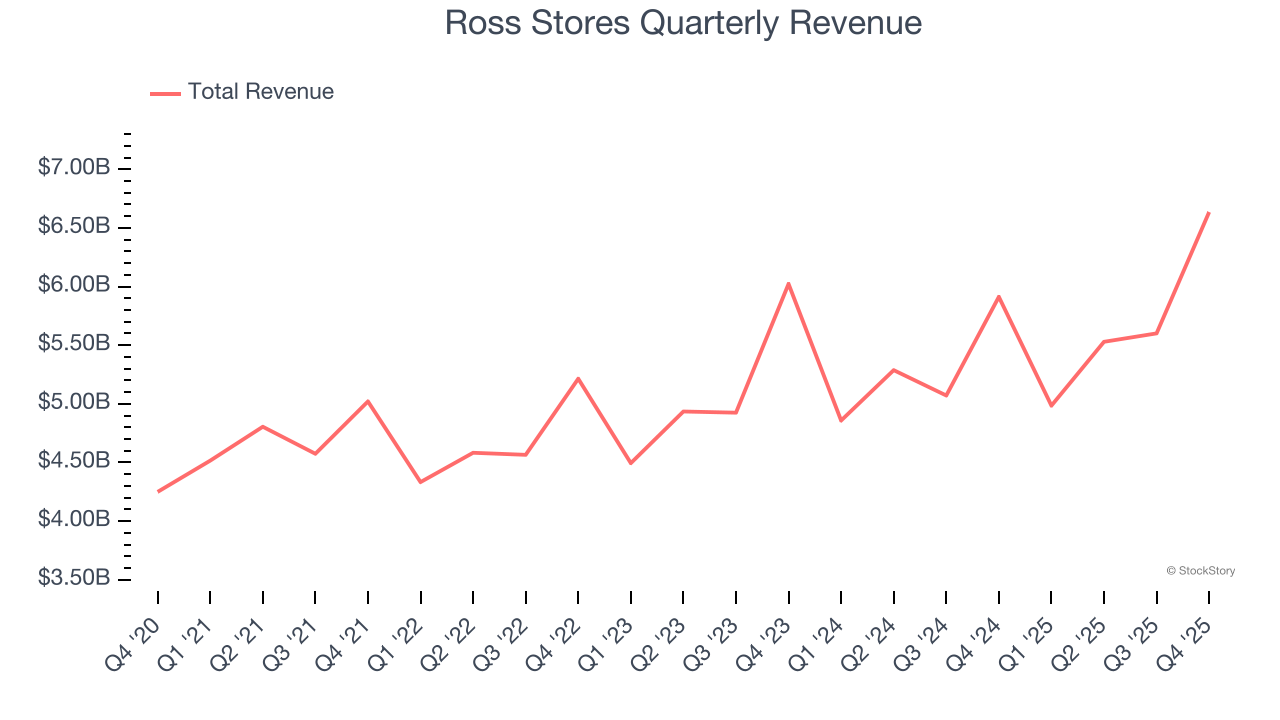
This quarter, Ross Stores reported year-on-year revenue growth of 12.2%, and its $6.64 billion of revenue exceeded Wall Street’s estimates by 3.2%.
Looking ahead, sell-side analysts expect revenue to grow 4.4% over the next 12 months, a slight deceleration versus the last three years. We still think its growth trajectory is attractive given its scale and indicates the market sees success for its products.
ALSO WORTH WATCHING: Nvidia’s Quiet Partner. Nvidia’s chips cost a hundred grand. The connectors that make them work cost even more. One company makes them all.
Every AI server needs specialized infrastructure the chip companies don’t make. High-speed cables. Power connectors. Thermal sensors. This 90-year-old company built a monopoly on it. The AI boom just started. This stock is still flying under the radar. Claim The Stock Ticker Here for FREE.
Store Performance
Number of Stores
The number of stores a retailer operates is a critical driver of how quickly company-level sales can grow.
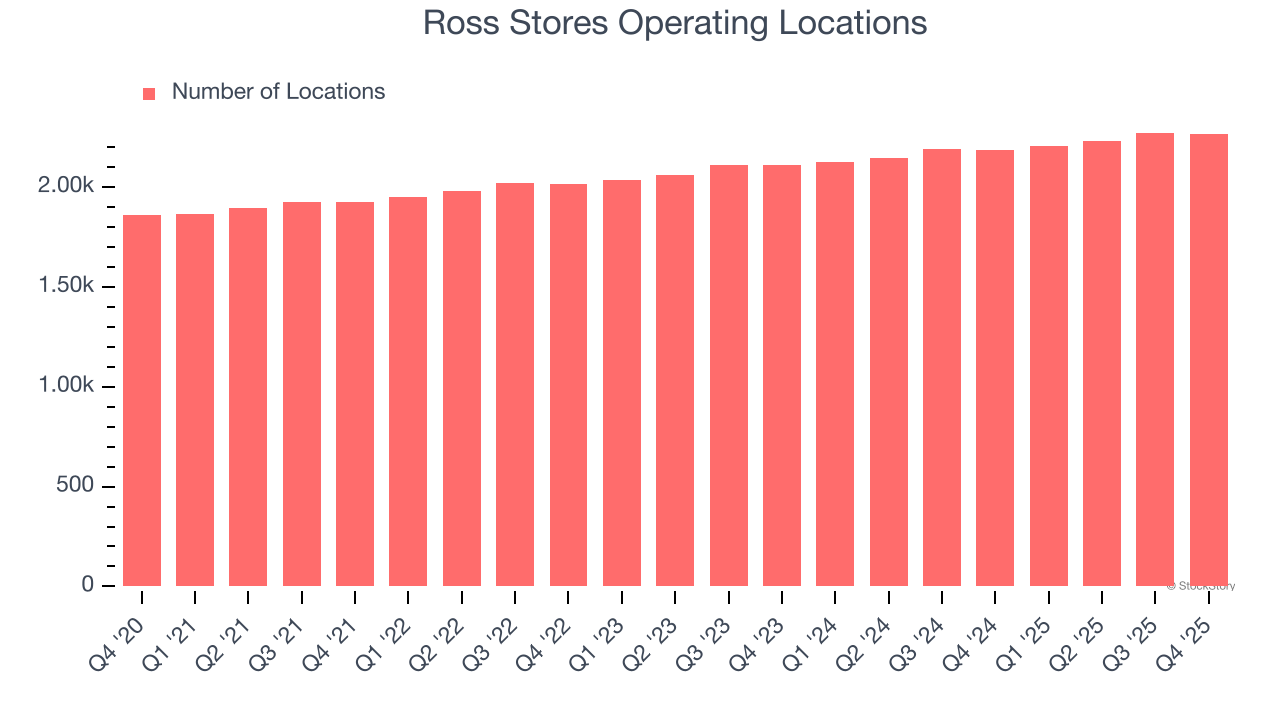
Ross Stores operated 2,267 locations in the latest quarter. It has opened new stores quickly over the last two years, averaging 3.9% annual growth, faster than the broader consumer retail sector.
When a retailer opens new stores, it usually means it’s investing for growth because demand is greater than supply, especially in areas where consumers may not have a store within reasonable driving distance.
Same-Store Sales
The change in a company's store base only tells one side of the story. The other is the performance of its existing locations and e-commerce sales, which informs management teams whether they should expand or downsize their physical footprints. Same-store sales gives us insight into this topic because it measures organic growth for a retailer's e-commerce platform and brick-and-mortar shops that have existed for at least a year.
Ross Stores’s demand has been spectacular for a retailer over the last two years. On average, the company has increased its same-store sales by an impressive 3.6% per year. This performance suggests its rollout of new stores is beneficial for shareholders. We like this backdrop because it gives Ross Stores multiple ways to win: revenue growth can come from new stores, e-commerce, or increased foot traffic and higher sales per customer at existing locations.
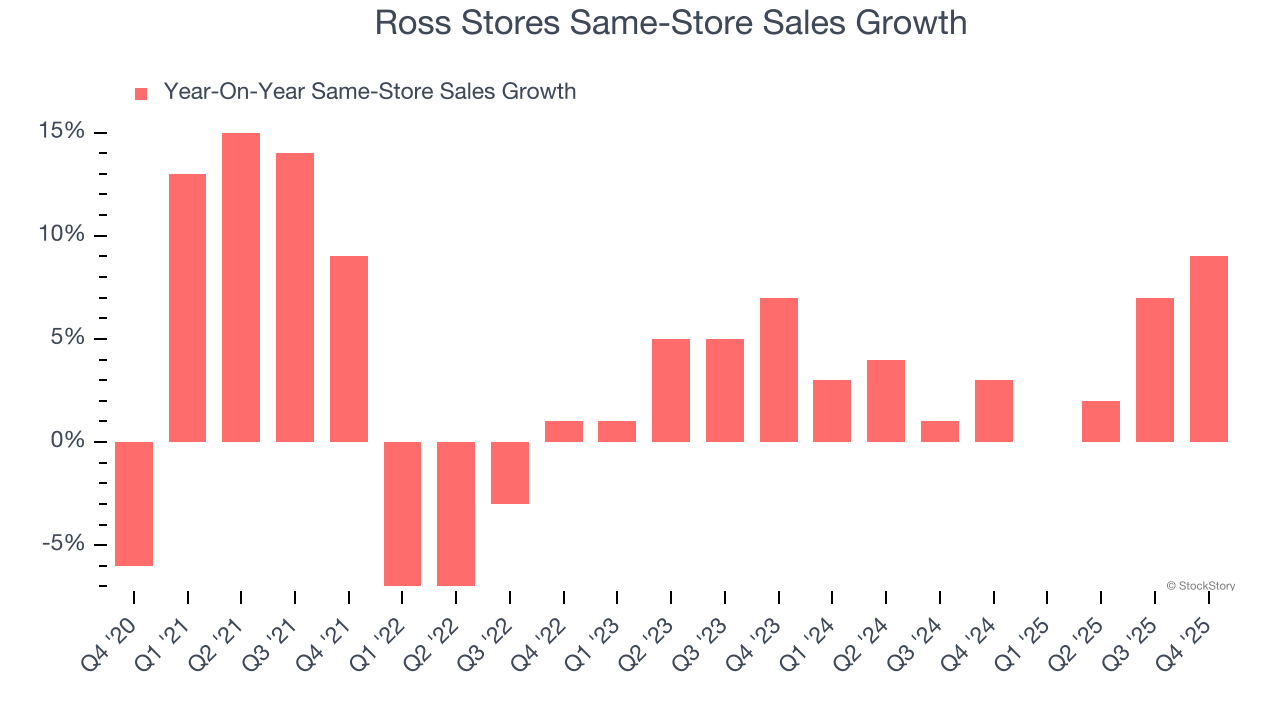
In the latest quarter, Ross Stores’s same-store sales rose 9% year on year. This growth was an acceleration from its historical levels, which is always an encouraging sign.
Key Takeaways from Ross Stores’s Q4 Results
We enjoyed seeing Ross Stores beat analysts’ revenue expectations this quarter. We were also happy its gross margin outperformed Wall Street’s estimates. On the other hand, its EBITDA missed. Zooming out, we think this was a mixed quarter. The stock traded up 6.1% to $209.52 immediately following the results.
So do we think Ross Stores is an attractive buy at the current price? What happened in the latest quarter matters, but not as much as longer-term business quality and valuation, when deciding whether to invest in this stock. We cover that in our actionable full research report which you can read here (it’s free).