WASHINGTON, D.C. — In a decisive move to stabilize a global economy reeling from escalating conflict in the Middle East, the Trump administration officially began the release of 172 million barrels of crude oil from the Strategic Petroleum Reserve (SPR) today, March 16, 2026. This massive injection of supply—the largest single-country release in history—is aimed at arresting the parabolic surge in gasoline prices and providing a critical buffer as the maritime blockade of the Strait of Hormuz threatens to choke off 20% of the world’s daily oil supply.
The release is the cornerstone of a coordinated effort with 31 other member nations of the International Energy Agency (IEA), totaling a 400 million-barrel global intervention. For American consumers, who have seen prices at the pump jump over 20% in the last three weeks to a national average of $3.63 per gallon, the move represents a high-stakes gamble by the administration to preserve economic momentum ahead of the 2026 midterm elections while navigating a volatile military confrontation between U.S.-Israeli forces and Iran.
The Logistics of a Historic Intervention
The administration’s plan, announced by Energy Secretary Chris Wright earlier this week, involves discharging approximately 1.43 million barrels per day over the next 120 days. This brings the U.S. contribution to nearly half of the total IEA-coordinated release. The timeline of this event traces back to late February 2026, when Iranian forces began mining the Strait of Hormuz following increased sanctions and regional skirmishes. The resulting "risk premium" sent Brent crude prices screaming toward $120 per barrel before today’s operational launch helped pull prices back into the $90–$95 range.
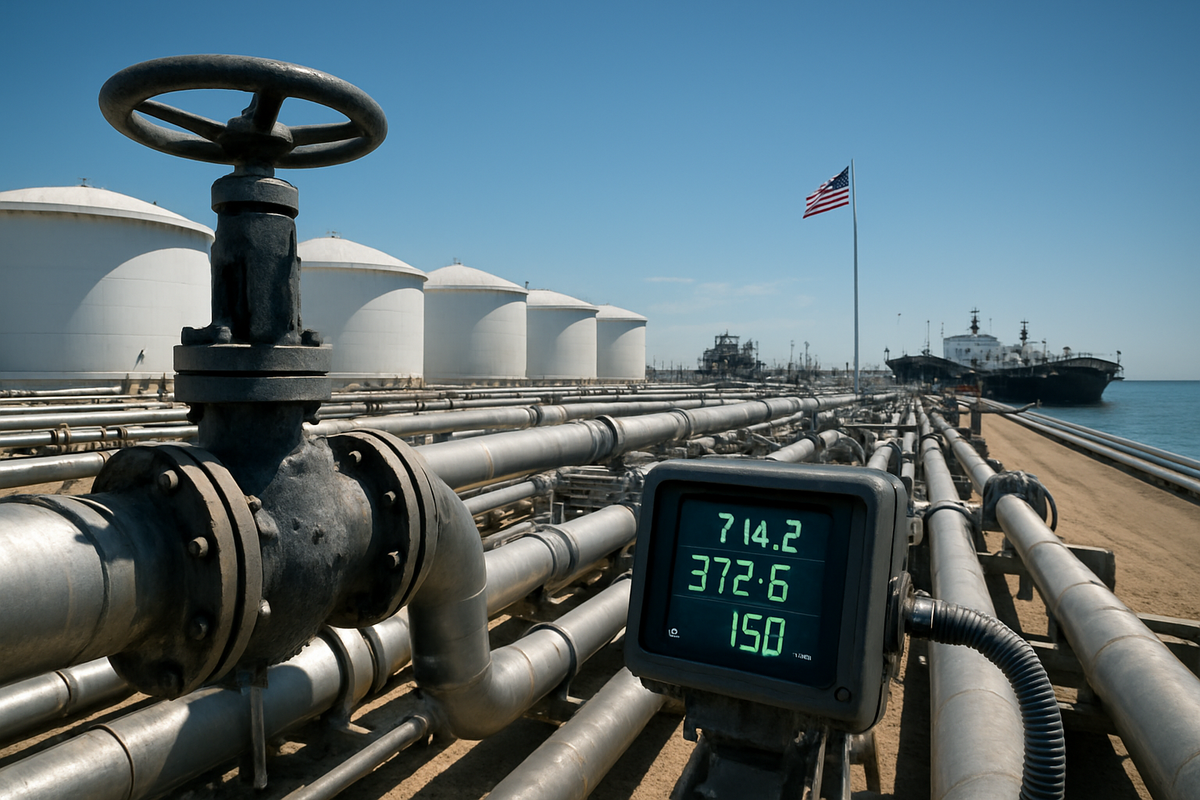
Key stakeholders, including the Department of Energy and private midstream partners, have spent the last 72 hours prepping the four major SPR storage sites in Texas and Louisiana. Unlike previous releases, the current administration is utilizing a "market-savvy" swap mechanism. The government is effectively selling current high-priced barrels and contracting to buy back 200 million barrels for delivery in 2027 at lower "forward" prices. This strategy, according to administration officials, aims to replenish the reserve to a higher level than it started, framing the move as a profitable trade for the taxpayer rather than a depletion of national security assets.
The initial market reaction has been one of cautious relief. While the physical barrels will take weeks to reach refineries, the "paper market" responded immediately. Futures for West Texas Intermediate (WTI) stabilized as traders factored in the sudden surge of liquidity. However, many analysts warn that while 1.43 million barrels per day is significant, it cannot fully replace the nearly 20 million barrels per day currently blocked from exiting the Persian Gulf.
Winners and Losers in the Energy Sector
The massive SPR release and the underlying geopolitical crisis have created a fragmented landscape for public energy companies. Among the clear winners are domestic midstream and logistics providers. Energy Transfer LP (NYSE: ET), which operates the crucial Nederland and Houston terminals, is seeing a surge in throughput as the physical SPR oil moves through its infrastructure. Similarly, U.S.-based refiners like Valero Energy Corporation (NYSE: VLO) and Marathon Petroleum Corp (NYSE: MPC) are positioned to outperform. These companies benefit from widening "crack spreads"—the profit margin between the cost of crude and the price of refined products like diesel and jet fuel—as global refined product supplies remain tight.
On the production side, the impact is more nuanced. ConocoPhillips (NYSE: COP) is viewed by many analysts as a "clean play" beneficiary. With a portfolio heavily weighted toward low-cost domestic production in the Permian Basin and Alaska, the company is shielded from the Hormuz blockade while still reaping the rewards of $90+ oil prices. Conversely, global giants like Exxon Mobil Corporation (NYSE: XOM) and Chevron Corporation (NYSE: CVX) face a "double-edged sword." While their domestic assets are highly profitable, their global footprints are under pressure. Chevron recently had to suspend certain offshore operations near the conflict zone for security reasons, and Exxon’s partnerships in the Middle East face severe logistics hurdles that could offset domestic gains.
The primary "losers" in this scenario are international refiners dependent on Middle Eastern crude, most notably Sinopec (OTC:SNPMY). As the world’s largest refiner, Sinopec is grappling with a catastrophic supply squeeze in Asia, where the lack of access to Persian Gulf crude has forced a sharp reduction in refinery utilization. For these firms, the U.S. SPR release offers little relief, as the physical barrels are largely destined for Western Hemisphere refineries.
A New Precedent in Energy Policy
This 172 million-barrel release marks a significant shift in how the Strategic Petroleum Reserve is utilized. Historically, the reserve was seen as a "break glass in case of emergency" tool for physical supply disruptions. While the current Hormuz blockade certainly qualifies, the Trump administration’s aggressive use of "swaps" to grow the reserve through the crisis represents a departure from the 2022 releases under the Biden administration, which the current President once criticized. By aiming to return 200 million barrels for the 172 million released, the administration is attempting to turn a crisis into a strategic expansion of the nation's energy cushion.
This event also highlights a broader trend: the "weaponization" of energy reserves in an era of deglobalization. As the U.S. increasingly asserts its role as a swing producer and a global energy arbiter, the SPR is being used as a diplomatic and economic lever to counteract the influence of OPEC+ and regional adversaries. The coordinated IEA action suggests a hardening of the "Western Energy Bloc," where the U.S., Europe, and Japan use their collective reserves to insulate their economies from shocks originating in the Middle East or Russia.
The regulatory implications are also surfacing. The Department of Energy has signaled it will fast-track permits for pipeline expansions that facilitate SPR movement, a move that could permanently alter the midstream landscape. This proactive stance contrasts with the slower, more cautious regulatory environment of the early 2020s, reflecting a "drill and deliver" philosophy that defines the current administration's energy stance.
What Comes Next: Escalation or Stabilization?
In the short term, the success of this plan hinges on the stability of the "swap" market. If oil prices remain stubbornly high due to a prolonged war, the government may find it difficult to execute the buy-back of 200 million barrels at the projected lower prices. Investors should watch for the "backwardation" of the oil curve; if the gap between current and future prices narrows, the administration's "no-cost" replenishment strategy could become a fiscal liability.
The medium-term outlook is dominated by the military situation. Should the U.S. and its allies succeed in reopening the Strait of Hormuz within the 120-day window provided by the SPR release, the market could see a significant "supply glut" as both SPR oil and returned Middle Eastern oil hit the market simultaneously. This scenario would likely lead to a sharp correction in oil prices, benefiting retailers and consumers but potentially hurting the stock prices of domestic producers like Pioneer Natural Resources (now part of ExxonMobil) and Diamondback Energy (NASDAQ: FANG).
Strategic pivots are already underway. Energy companies are increasingly investing in "interconnects" that allow for more flexible movement between the SPR and private storage. The market is also bracing for the possibility that this is only the first of several releases if the conflict drags into the summer of 2026.
Final Assessment: A High-Stakes Balancing Act
The Trump administration’s deployment of 172 million barrels is a historic attempt to manage an unprecedented energy crisis through a combination of military pressure and market liquidity. The key takeaway for the market is that the SPR has evolved from a static insurance policy into an active trading desk for the federal government. This move has successfully taken the "top off" the price spike, but it has not removed the underlying geopolitical risk.
Moving forward, the energy market will remain in a state of high alert. Investors should prioritize companies with strong domestic infrastructure and "un-blockable" supply chains. The success of this intervention will be measured not just by the price of gas in May, but by the administration's ability to actually refill the reserve without crashing the market or incurring a loss.
In the coming months, the focus will shift from the volume of the release to the pace of the conflict. If the SPR release buys enough time for a diplomatic or military resolution, it will be hailed as a masterstroke of economic defense. If not, the world may find itself having exhausted its greatest energy weapon just as the real battle begins.
This content is intended for informational purposes only and is not financial advice.