As Wall Street turns its gaze toward Cupertino, Apple Inc. (NASDAQ: AAPL) is preparing to release its fiscal first-quarter earnings report on Thursday, January 29, 2026. The announcement comes at a pivotal moment for the tech giant, which has spent much of the past year navigating a transition into a more aggressive, AI-first business model. With shares experiencing slight volatility in late January, the report is expected to serve as a referendum on the success of the iPhone 17 "supercycle" and the company’s ability to monetize its long-awaited "Apple Intelligence" platform.
The implications of this report extend far beyond Apple's balance sheet, acting as a barometer for the health of the global consumer electronics sector and the semiconductor industry. Investors are particularly keen to see if Apple can maintain its industry-leading margins in the face of skyrocketing component costs and a shifting leadership structure. As the market expects a revenue jump to near-record levels, the pressure is on CEO Tim Cook and his newly formalized successor-in-waiting, John Ternus, to prove that Apple’s walled garden is more fortified than ever.
Analysts have set a high bar for the holiday quarter, with consensus estimates placing revenue between $138.4 billion and $139.8 billion—a double-digit increase over the previous year. Earnings per share (EPS) are projected to land between $2.65 and $2.72. The primary driver behind these figures is the iPhone 17 lineup, which launched in late 2025. While the standard and Pro Max models have reportedly seen unprecedented demand, particularly in the Chinese market where Apple surged to a 25% market share, the timeline has not been without its setbacks. Supply chain data from December 2025 revealed a significant stumble with the "iPhone Air"—an ultra-thin experimental model that saw production cuts of over 80% due to tepid consumer interest.
The lead-up to this Thursday's announcement has been marked by a significant shift in leadership and strategic focus. In late 2025, Apple formalized John Ternus, the Senior VP of Hardware Engineering, as the clear heir to the CEO throne, while the departure of AI chief John Giannandrea in early 2026 signaled a pivot toward a more hardware-integrated "engineering-first" AI strategy. Meanwhile, the status of Apple Intelligence has evolved from a beta-testing curiosity into a core product. With iOS 26 adoption reaching over 55% by year-end, the integration of Google’s (NASDAQ: GOOGL) Gemini 3 into Siri 2.0 has finally brought the "Siri of the future" to hundreds of millions of users.
Market reaction in the two weeks leading up to the report has been cautious, with AAPL shares retreating roughly 1.5% from their December highs. This "sluggishness" is attributed to concerns over the massive costs associated with 2nm silicon production and the looming specter of regulatory fines in the European Union and India. However, the bull case remains strong, built on the premise that Apple is successfully transitioning from a hardware manufacturer into an "Edge AI" service provider, a move that could permanently reset the company’s valuation floor.
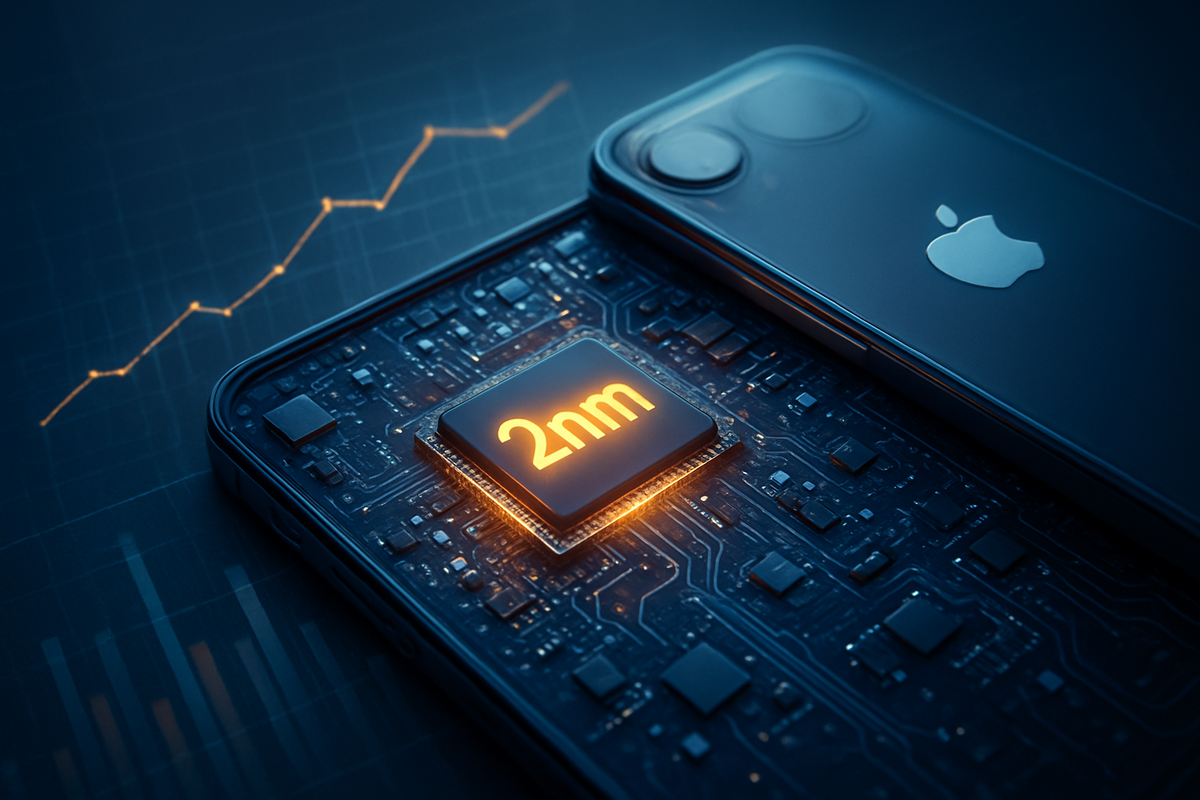
The ripple effects of Apple’s performance will be felt most acutely across its global supply chain. One of the most significant winners this quarter is Taiwan Semiconductor Manufacturing Co. (NYSE: TSM), which has successfully moved into mass production of 2nm chips for Apple’s A20 series. Despite intense competition for foundry space from AI titans like Nvidia (NASDAQ: NVDA), Apple has reportedly secured over 50% of TSMC’s 2nm capacity through 2026. This technological leap allows TSMC to command higher prices, though the estimated $280 cost per SoC (System on a Chip) remains a significant overhead for Apple to absorb.
Samsung Display, a subsidiary of Samsung Electronics (OTC:SSNLF), has also emerged as a strategic winner. Following quality control failures at Chinese panel maker BOE in late 2025, Apple shifted millions of OLED orders to Samsung to ensure holiday stock for the iPhone 17 Pro models. Furthermore, Samsung is reportedly preparing Gen-8.6 fabrication lines to support the first OLED MacBook Pro models expected later this year. Component specialists like Cirrus Logic (NASDAQ: CRUS) and Skyworks Solutions (NASDAQ: SWKS) are also poised for gains, with Cirrus reporting strong demand for its high-performance mixed-signal chips and Skyworks benefiting from the increased radio-frequency complexity required by Edge AI and 5G Advanced protocols.
On the losing side, the "Mobile Division" of Samsung and other Android OEMs face a deepening "differentiation crisis." As Apple integrates under-display Face ID and advanced "Edge AI" capabilities that run locally on its proprietary silicon, competitors are finding it harder to justify premium price points. Additionally, memory suppliers are in a precarious position; while AI-driven demand is high, the volatility in DRAM and NAND prices could lead to margin compression for manufacturers that cannot pass those costs directly to the consumer, as Apple has historically done through its higher-tier storage upgrades.
The broader significance of this earnings report lies in the industry-wide shift toward "Edge AI"—the processing of complex artificial intelligence tasks locally on a device rather than in the cloud. Apple’s decision to integrate 12GB to 16GB of RAM as a baseline for its new devices represents a fundamental change in smartphone architecture. This trend is forcing a convergence between the mobile and PC industries, as the power required for on-device Large Language Models (LLMs) nears the capabilities of modern laptops. This event mirrors the historical shift seen during the transition from the Intel era to Apple Silicon (M1), where hardware-software integration became the primary competitive moat.
Furthermore, the 2nm semiconductor revolution is reshaping the geopolitical and regulatory landscape. Apple’s reliance on TSMC’s most advanced nodes keeps it at the center of the ongoing technological "tug-of-war" between global powers. Domestically, the launch of "Apple Intelligence Pro"—a paid subscription tier for advanced AI tasks like automated video editing—marks a critical shift in how big tech plans to monetize AI. If Apple can prove that consumers are willing to pay a monthly fee for enhanced device capabilities, it will provide a blueprint for competitors like Google and Samsung to follow, potentially ushering in an era of "Hardware-as-a-Service."
Regulatory headwinds, however, remain a potent threat. Apple enters 2026 facing intensified probes in India over its global turnover and ongoing battles with the EU’s Digital Markets Act (DMA). These legal challenges are no longer just about app store fees; they now target the very integration of AI services that Apple claims is vital for user privacy. The outcome of these disputes could dictate whether the "closed loop" AI ecosystem Apple is building will be allowed to exist in its current form in major international markets.
Looking ahead, the immediate future for Apple will be defined by the rollout of the iPhone 18 and the long-rumored entry into the foldable device market. While the "iPhone Air" may have stumbled, supply chain rumors suggest Apple is pivoting those ultra-thin design lessons toward a foldable AMOLED device for late 2026 or early 2027. Investors will be listening closely during Thursday’s call for any hints regarding the roadmap for the Vision Pro 2, which many expect to be a more consumer-friendly version of the company’s spatial computing headset.
In the long term, Apple’s biggest challenge will be maintaining its gross margins as silicon costs explode. The transition to 2nm wafers is significantly more expensive than previous nodes, and the company may soon have to choose between raising the entry price of the iPhone or adopting "chiplet" designs—a move that would mix 2nm cores with older, cheaper nodes. Strategically, the market will be watching the "take-rate" for Apple Intelligence Pro subscriptions. If this software-driven revenue stream scales as quickly as analysts predict, it could offset hardware margin pressures and lead to a significant re-rating of Apple’s stock as a high-margin services business.
Thursday’s earnings report will be more than just a quarterly financial update; it will be a status report on the second year of the AI era. The key takeaways for investors will likely center on the health of the Chinese market, the resilience of hardware margins in a high-cost environment, and the initial momentum of AI-driven services. If Apple beats expectations and raises guidance, it will solidify the "Edge AI" narrative and likely ignite a broader rally across the tech sector and its specialist suppliers.
Moving forward, the market will remain focused on the leadership transition and the company's ability to innovate beyond the traditional smartphone form factor. Investors should keep a close eye on TSMC’s capacity reports and any news regarding the integration of more advanced LLMs into the iOS ecosystem. As the lines between hardware, software, and services continue to blur, Apple’s ability to remain the central "utility" of the modern digital life will be the ultimate measure of its lasting impact on the global economy.
This content is intended for informational purposes only and is not financial advice