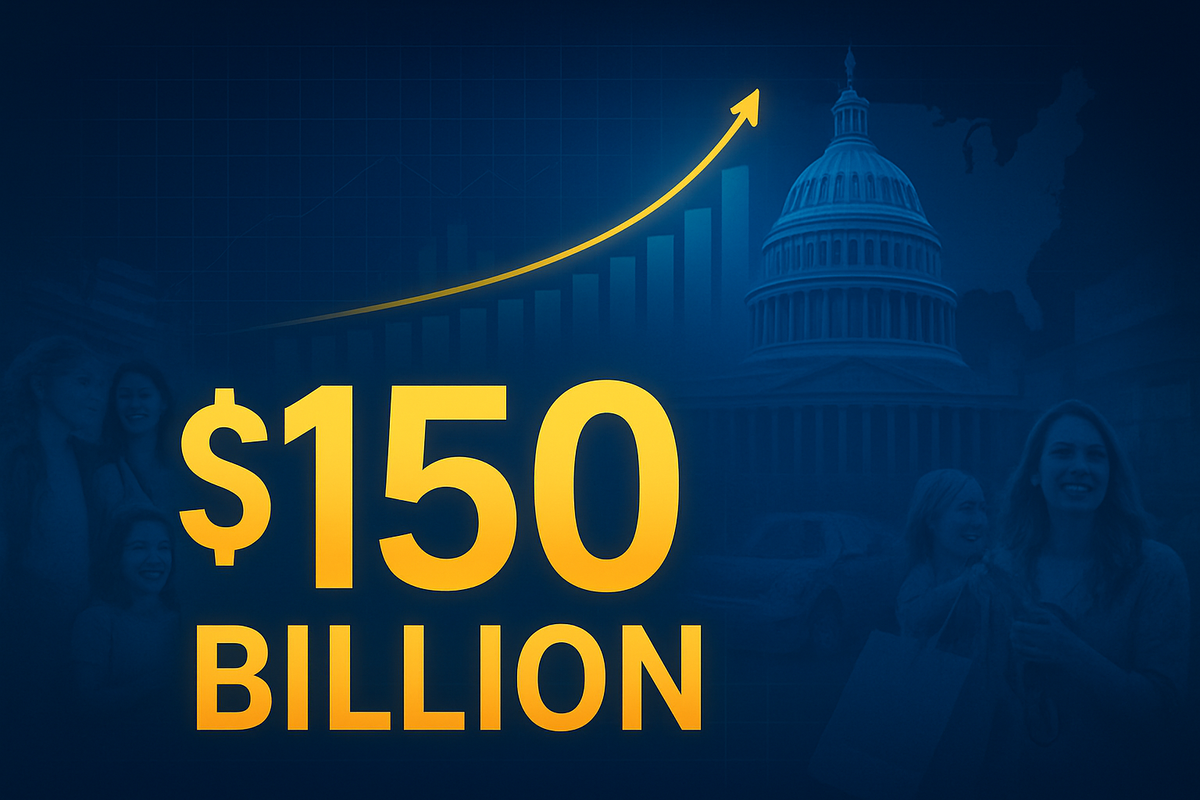
As the IRS officially opens the 2026 tax filing season today, January 19, 2026, the American economy is standing on the precipice of a massive, unintended fiscal injection. Analysts are projecting a record-breaking tax-refund windfall between $100 billion and $150 billion over the next three months—a surge primarily fueled by the retroactive tax cuts of 2025. This "delayed stimulus" is expected to provide a significant tailwind for consumer spending, potentially altering the trajectory of the U.S. economy for the remainder of the year.
The phenomenon is the direct result of a legislative "lag effect." Following the passage of the One Big Beautiful Bill Act (OBBBA) in July 2025, the IRS was unable to update payroll withholding tables in time for the remainder of the year. Consequently, millions of American workers spent the last six months of 2025 overpaying their taxes based on old, higher rates. Now, as they file their returns, those overpayments are being reclaimed in the form of what JPMorgan Chase & Co. (NYSE: JPM) economists are calling a "monster" refund season that could boost first-quarter GDP by as much as 0.8% on an annualized basis.
The OBBBA Catalyst and the Withholding Trap
The road to this $150 billion windfall began in the summer of 2025 with the signing of the OBBBA, a sweeping piece of legislation that expanded the Child Tax Credit (CTC), reinstated 100% bonus depreciation for businesses, and introduced a popular new exemption for tip and overtime income. While the bill was hailed as a win for the middle class, its mid-year implementation created a unique accounting quirk. Because the tax changes were retroactive to January 1, 2025, but withholding wasn't adjusted until January 2026, the federal government essentially acted as a forced savings account for the American public.
Key provisions driving the surge include the expansion of the Child Tax Credit to $2,200 per child and a significant boost to the standard deduction, which rose to $15,750 for individuals. Additionally, the retroactive repeal of the Research & Development (R&D) amortization requirement—reverting to immediate expensing—has paved the way for small and mid-sized tech firms to claim massive "catch-up" refunds. This combination of individual and corporate tax relief is expected to push the average refund per return to approximately $3,743, a staggering 44% increase over the previous year.
Market participants were initially slow to price in the magnitude of this liquidity injection. However, as the tax season begins, data from the Treasury Department indicates a surge in "intent to file" early, particularly among lower-to-middle-income cohorts who stand to benefit most from the retroactive Child Tax Credit and the new "No Tax on Tips" deduction. This early rush is expected to front-load consumer demand into February and March, providing a stark contrast to the usual post-holiday retail lull.
Retail and Finance: The Immediate Winners
The primary beneficiaries of this refund surge are expected to be value-oriented retailers and consumer finance firms. Historically, the bottom 40% of earners spend nearly 30% of their tax refunds within 30 days of receipt. Walmart Inc. (NYSE: WMT) is perhaps the most obvious winner, with internal projections suggesting a record Q1 for its grocery and electronics divisions. Similarly, Ross Stores Inc. (NASDAQ: ROST) and Ollie’s Bargain Outlet Holdings, Inc. (NASDAQ: OLLI) are bracing for a "second Christmas" as households look to upgrade home goods and apparel with their lump-sum checks.
In the services sector, the tax preparation industry is entering what Intuit Inc. (NASDAQ: INTU) CEO Sasan Goodarzi described in a recent investor call as a "complexity-driven goldmine." The new retroactive deductions for tips and overtime have made DIY filing more complicated, driving users toward premium assisted tiers of TurboTax. Meanwhile, H&R Block Inc. (NYSE: HRB) is expected to see a surge in its "Emerald Card" disbursements, which allow filers to access their refund amounts almost immediately.
The automotive sector is also signaling a turnaround. Carvana Co. (NYSE: CVNA) and other used-car retailers often see a high correlation between tax refund season and down payments for vehicle purchases. With the 2026 refund checks being significantly larger, analysts expect a tightening of the used-car market and a potential boost to subprime auto lenders who have struggled with delinquencies over the past 18 months. Affirm Holdings Inc. (NASDAQ: AFRM) and other Buy Now, Pay Later (BNPL) providers are also expected to benefit as consumers use refunds to "cure" outstanding balances, improving the credit quality of their loan portfolios.
Broader Economic Significance and the Fed’s Dilemma
Beyond the immediate boost to retail, this $150 billion injection has profound implications for the Federal Reserve’s monetary policy. For the past year, the Fed has been balancing on a tightrope, attempting to cool inflation without triggering a recession. This sudden "fiscal sugar rush" threatens to complicate that mission. If the refund surge leads to a significant spike in discretionary spending, it could keep "sticky" inflation components, like services and dining out, higher for longer.
This creates a "policy conflict" where the fiscal side is stimulating the economy just as the monetary side is attempting to stay restrictive. Historical precedents, such as the 2008 stimulus checks and the 2021 American Rescue Plan, suggest that large-scale liquidity injections often lead to short-term spikes in consumer price indices (CPI). Investors are now watching the 10-year Treasury yield closely, as a stronger-than-expected Q1 could force the Fed to postpone any planned interest rate cuts until the second half of 2026.
Furthermore, the OBBBA’s retroactive R&D expensing represents a major shift in industrial policy. By allowing companies like Nvidia Corp. (NASDAQ: NVDA) and other high-tech manufacturers to immediately deduct domestic research costs, the government is effectively subsidizing the current AI-driven Capex cycle. This move is intended to keep the U.S. competitive with global rivals, but in the short term, it adds another layer of liquidity to an already flush corporate sector.
What Comes Next: A Q1 Boom Followed by a Q3 Cliff?
While the short-term outlook is undoubtedly bullish for the consumer, the long-term sustainability of this growth is an open question. Strategic pivots are already underway at major banks; Robinhood Markets Inc. (NASDAQ: HOOD) has recently launched new promotional "refund-match" programs to encourage taxpayers to invest their windfalls rather than spend them. If a significant portion of the $150 billion is funneled into the equity and crypto markets, it could sustain the current bull run well into the summer.
However, a potential "fiscal cliff" looms in late 2026. Once the retroactive "catch-up" payments from 2025 are exhausted, the economy will have to rely on organic wage growth and normalized withholding. Companies that over-expand to meet the Q1 surge may find themselves with excess inventory by the fourth quarter. Retailers will need to be disciplined in their procurement to ensure they don't get caught in a "boom-bust" cycle typical of stimulus-driven periods.
The market should also prepare for a shift in corporate guidance. As Q1 results are released in April and May, expect a wave of "beat and raise" reports from consumer-facing companies. However, the savvy investor will look past the headline numbers to see how much of that growth is driven by one-time tax windfalls versus sustainable market share gains.
The Investor Wrap-Up: Watch the Velocity of Money
In summary, the 2026 tax season is shaping up to be a unique historical anomaly—a multi-billion dollar stimulus package delivered not by a new spending bill, but by a 2025 accounting delay. The key takeaways for investors are the massive front-loading of consumer demand and the potential for a "hawkish pause" from the Federal Reserve in response to this liquidity.
The market moving forward will likely be characterized by heightened volatility in the retail and fintech sectors as they digest this influx of cash. The lasting impact of the OBBBA will be measured by whether this "sugar rush" can be converted into long-term capital investment, or if it simply fuels a temporary spike in consumption.
In the coming months, watch for February and March retail sales data as the first hard evidence of the refund surge's impact. If the numbers exceed expectations, the "Great 2026 Refund Surge" may go down as the catalyst that kept the U.S. economy afloat during a critical transition period, even as it challenged the central bank's fight against inflation.
This content is intended for informational purposes only and is not financial advice.