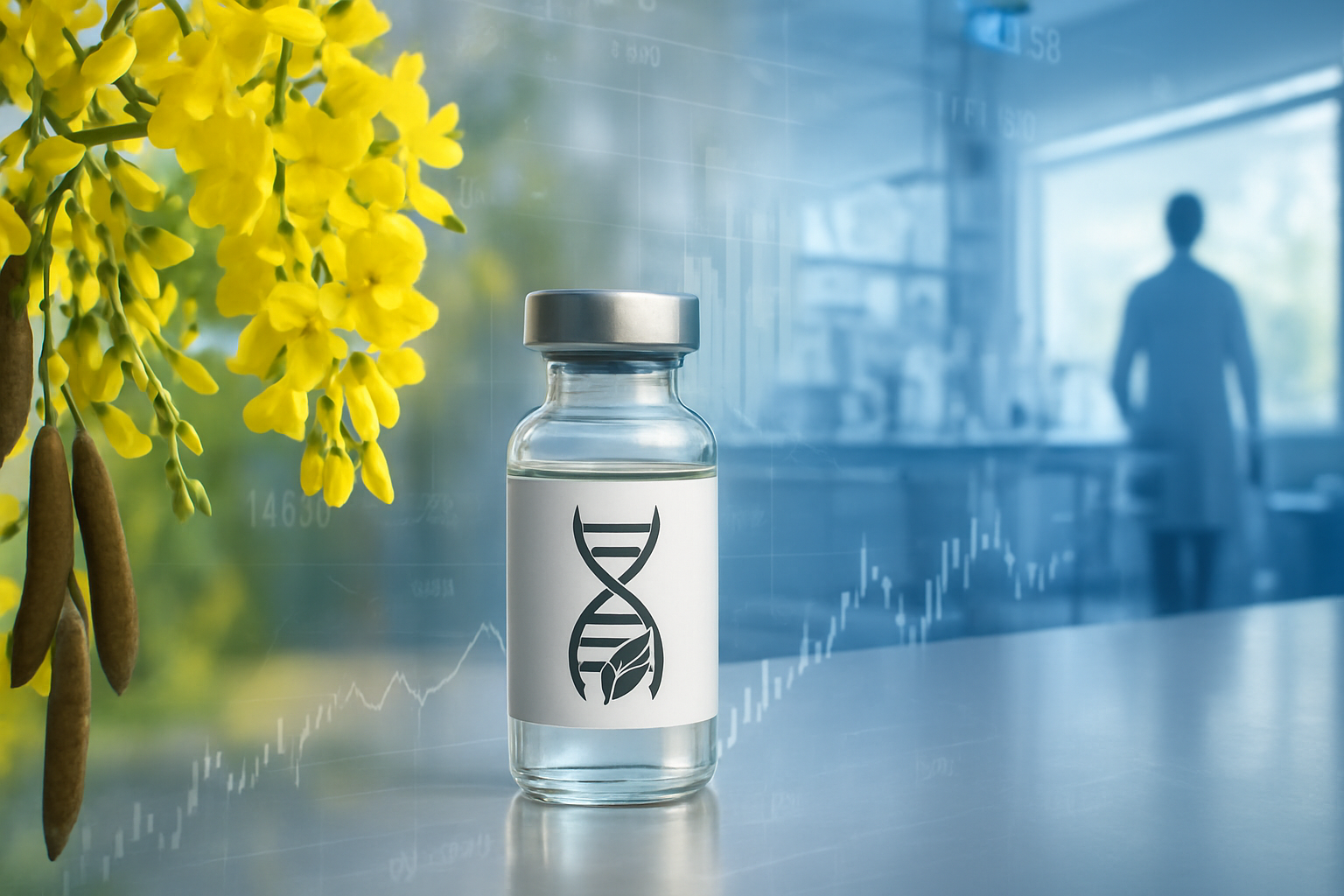
In a move that has sent ripples through the biotech sector on the final trading days of the year, Hunterbrook Capital announced a significant bullish position in Achieve Life Sciences (NASDAQ: ACHV) today, December 30, 2025. The investment firm, which operates a unique hybrid model of investigative journalism and hedge fund trading, released a comprehensive report through its media arm titled "Put it in the water! — How a Toxic Tree May Save Thousands of Smokers." The disclosure triggered an immediate market reaction, with shares of Achieve Life Sciences jumping more than 10% within hours of the publication.
The core of Hunterbrook’s thesis rests on cytisinicline, a plant-based alkaloid derived from the seeds of the Laburnum tree. While the compound has been used in Eastern Europe for decades, Achieve Life Sciences is currently steering it through the final stages of the U.S. Food and Drug Administration (FDA) approval process. Hunterbrook’s aggressive long position signals a high degree of confidence that cytisinicline will not only secure regulatory approval but will also displace long-standing incumbents in a smoking cessation market that has seen virtually no pharmacological innovation in nearly two decades.
A New Era for Smoking Cessation: The Rise of Cytisinicline
The momentum behind Achieve Life Sciences has been building throughout 2025, culminating in today’s institutional endorsement. The company officially submitted its New Drug Application (NDA) for smoking cessation in June 2025, which was subsequently accepted by the FDA for review in September. The agency has assigned a Prescription Drug User Fee Act (PDUFA) targeted action date of June 20, 2026. This timeline places Achieve at the threshold of a massive commercial launch, provided the clinical data holds up under final scrutiny.
Hunterbrook’s investigative report highlights the superior safety profile of cytisinicline compared to existing treatments. For years, the market leader was Chantix, produced by Pfizer (NYSE: PFE), which, despite its efficacy, was often associated with severe side effects including vivid dreams and psychiatric concerns. Furthermore, Pfizer faced significant setbacks with varenicline (the generic name for Chantix) due to carcinogen impurities, leading to widespread recalls. In contrast, Achieve’s ORCA-2 and ORCA-3 clinical trials demonstrated that cytisinicline offers a "cleaner" experience for patients, with significantly lower rates of nausea and other adverse events.
The timeline of events leading to this moment includes the successful conclusion of the ORCA-OL long-term safety trial in October 2025. Achieve submitted its 120-day safety update to the FDA in November, confirming that over 330 participants had completed a full year of treatment—exceeding the FDA’s requirements for cumulative exposure data. This data set appears to have been the "smoking gun" for Hunterbrook, providing the quantitative assurance needed to back their qualitative investigation into the drug's potential.
Initial market reactions to the Hunterbrook report have been overwhelmingly positive. Beyond the immediate double-digit stock price surge, analysts from major firms like Citigroup and Raymond James have reiterated "Strong Buy" ratings. With price targets currently ranging between $15.00 and $19.00, the market suggests that even after today’s jump, ACHV shares—trading around the $6.00 mark—may still be significantly undervalued relative to the drug's peak sales potential.
Winners and Losers in the Nicotine War
The primary winner in this scenario is undoubtedly Achieve Life Sciences (NASDAQ: ACHV). If cytisinicline receives FDA approval, the company will own the first new prescription smoking cessation aid in 20 years. Moreover, the FDA has granted the drug Breakthrough Therapy Designation for e-cigarette cessation. As the vaping epidemic continues to grow among younger demographics, Achieve is positioned to capture a "blue ocean" market where no FDA-approved prescription medication currently exists.
Conversely, the legacy players in the nicotine replacement therapy (NRT) space may face significant headwinds. Companies like GSK (NYSE: GSK) and Johnson & Johnson (NYSE: JNJ), which dominate the market for nicotine patches, gums, and lozenges, could see their market share erode. While NRTs currently account for nearly 70% of the cessation market, their long-term success rates are notoriously low. If cytisinicline proves to be both safer than Chantix and more effective than over-the-counter patches, the shift in physician prescribing habits could be swift and decisive.
Generic manufacturers of varenicline and bupropion (the generic for Zyban) also stand to lose. While these drugs are inexpensive, the "black box" warnings and side-effect profiles associated with them have historically limited their adoption. Achieve's plant-based alternative appeals to a growing consumer preference for botanical-derived medicines, potentially making it the "premium" choice for both doctors and patients looking to quit nicotine for good.
Disrupting the Status Quo: The Hunterbrook Model
The significance of this event extends beyond the biotech industry and into the world of financial journalism and hedge fund strategy. Hunterbrook Capital’s move is a high-stakes demonstration of its "journalism-led trading" model. By employing reporters to conduct deep-dive investigations—interviewing dozens of clinicians and program directors—the firm identifies market inefficiencies before they are reflected in stock prices. This model was first thrust into the spotlight with their short position on United Wholesale Mortgage (NYSE: UWMC) in early 2024, and today’s long position on ACHV reinforces their role as a disruptive force in market analysis.
From a broader industry perspective, the success of cytisinicline would validate the "re-discovery" of botanical compounds. For years, the pharmaceutical industry focused on synthetic molecules, but the Laburnum-derived cytisinicline suggests that looking back at traditional herbal medicines with modern clinical rigor can yield blockbuster results. This could trigger a wave of investment into other botanical drug candidates, such as those being developed by smaller firms like NFL Biosciences (Euronext Growth Paris:ALNFL).
Furthermore, the regulatory implications are profound. The FDA’s willingness to grant Breakthrough Therapy Designation for vaping cessation indicates a high-level policy shift toward treating nicotine addiction as a primary public health crisis. If Achieve succeeds, it may pave the way for a more streamlined regulatory pathway for other addiction-related therapies, a sector that has historically been underfunded and overlooked by major pharmaceutical conglomerates.
The Road to June 2026: What Comes Next?
In the short term, investors should expect continued volatility as the market digests the Hunterbrook report and waits for the next FDA update. The primary milestone on the horizon is the PDUFA date on June 20, 2026. Between now and then, Achieve Life Sciences will likely focus on scaling its commercial infrastructure and seeking potential partnerships with larger pharmaceutical firms for global distribution.
A strategic pivot may be required if the FDA requests additional data or if the vaping cessation trials encounter hurdles. However, the "National Priority Voucher" awarded by the FDA Commissioner suggests that the government is eager to see a solution for e-cigarette addiction. This could lead to a supplemental NDA (sNDA) process shortly after the initial smoking cessation approval, potentially doubling the drug's addressable market within 12 to 18 months of its first launch.
The primary challenge for Achieve will be commercial execution. Transitioning from a R&D-focused biotech to a commercial-stage company is a notoriously difficult leap. Investors will be watching closely to see if Achieve opts for a buyout by a larger player—such as a major pharmaceutical company looking to refresh its primary care portfolio—or if it attempts to go it alone in the U.S. market.
Final Assessment: A High-Stakes Bet on Public Health
The bullish position taken by Hunterbrook Capital in Achieve Life Sciences marks a pivotal moment for the company and the broader smoking cessation industry. By highlighting the safety and efficacy of cytisinicline, Hunterbrook has turned the spotlight on a drug that has the potential to save thousands of lives and disrupt a stagnant multi-billion dollar market.
The key takeaway for investors is the shift from clinical risk to regulatory and commercial risk. With the ORCA trials largely behind them and the NDA accepted, the "science" of cytisinicline is increasingly well-established. The moving parts now are the FDA's final decision and the company's ability to market a plant-based alternative in a field dominated by legacy generics and nicotine replacements.
As we move into 2026, the market will be watching the FDA's every move. If cytisinicline receives the green light in June, it could represent one of the most significant public health victories in recent memory—and a massive win for those who followed Hunterbrook's lead into the "toxic tree" that may finally help the world quit smoking.
This content is intended for informational purposes only and is not financial advice.