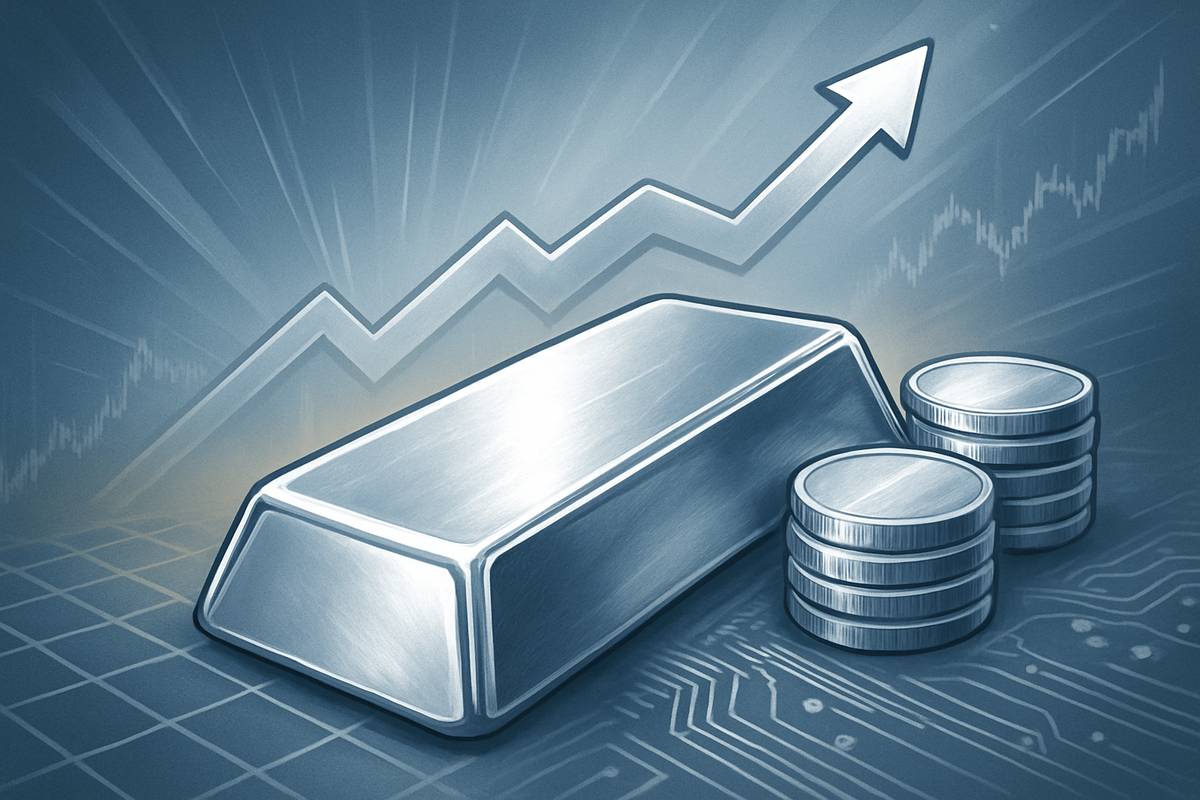
December 12, 2025 - Silver has shattered all previous records in an extraordinary rally, with spot prices soaring past the US$60 per troy ounce mark and reaching historic peaks. This remarkable ascent, which has seen the precious metal nearly double in value year-to-date, is primarily fueled by a relentless surge in industrial demand—particularly from green technologies—and a deepening structural supply deficit that has plagued the market for five consecutive years. Silver's stellar performance has significantly outpaced its more illustrious counterpart, gold, signaling a profound shift in market dynamics and underscoring its dual role as both a monetary asset and a critical industrial commodity.
The ongoing rally represents a "perfect storm" for silver, captivating investors and industrial consumers alike. Its indispensable role in the global energy transition, coupled with a constrained supply chain, has created an environment ripe for exponential price growth. As the world pushes towards decarbonization and advanced technological integration, silver finds itself at the epicenter of innovation, with its unparalleled conductivity making it irreplaceable in a myriad of high-growth sectors.
The Unfolding Silver Phenomenon: A Deep Dive into the Rally
Silver's journey to record highs has been nothing short of spectacular, culminating in an "exponential price rise" throughout the second half of 2025. As of December 12, 2025, spot silver prices touched an intraday high of $64.03 per ounce, with current trading hovering around $64.51-$64.57. This impressive surge represents an approximate 116% climb year-to-date, marking its eighth consecutive monthly price increase and positioning it as one of the best-performing commodities of the year.
The primary catalyst behind this unprecedented rally is the insatiable appetite from industrial sectors. Industrial use now accounts for more than half of global silver consumption, a proportion that continues to expand rapidly. Green technologies, particularly solar panels (photovoltaics or PV), stand out as a dominant force, with demand from the PV sector alone skyrocketing by an astounding 64% year-on-year in 2023. Silver's unmatched electrical conductivity is crucial for the efficient operation of solar cells, making it an indispensable component in the global energy transition. Beyond solar, silver is vital in electric vehicles (EVs) and their batteries, various electronic components, 5G networks, artificial intelligence (AI) infrastructure, and data centers. China, a global leader in solar and renewable energy, has been a significant contributor to this demand surge, driving industrial fabrication of silver to record highs in 2025.
Compounding the demand-side pressure is a severe and persistent supply deficit. The global silver market is currently experiencing its longest streak of structural shortfalls in recent memory, marking a five-year period of insufficient supply that is projected to extend into 2025. The deficit for 2024 was estimated to be between 176 and 215.3 million ounces, making it the fourth consecutive year of shortfall and the second highest in over two decades. Mine production has remained largely stagnant, fluctuating between 813-830.5 million ounces annually, hampered by declining ore grades, labor disruptions, rising energy costs, and a historical underinvestment in new mining projects. While recycling efforts contribute to the overall supply, they are proving insufficient to bridge the widening gap.
This unique combination of robust industrial demand and constrained supply has enabled silver to significantly outperform gold. While gold has seen a substantial rise of approximately 60% in 2025, silver's nearly 116% surge has almost doubled gold's gains. This superior performance is vividly reflected in the gold/silver ratio, which has fallen to around 69 points—its lowest level since summer 2021. Unlike gold, which is primarily driven by safe-haven investment and central bank demand, silver benefits from its dual utility, giving it greater upside potential, especially given its current price relative to its all-time high. Macroeconomic factors, including a weakened U.S. dollar, expectations of a less hawkish U.S. Federal Reserve policy (such as a 25 basis point interest rate cut in December 2025), and increased investor demand for precious metals amidst economic uncertainty, have further bolstered silver's appeal.
Corporate Impact: Winners and Losers in a Soaring Silver Market
The dramatic rise in silver prices creates a clear divide among public companies, significantly benefiting those involved in silver extraction and streaming, while posing considerable cost challenges for industries heavily reliant on silver as a critical input.
On the winning side, silver mining companies are experiencing a direct boost to their revenues and profit margins. Major players in this sector include Pan American Silver Corp. (NYSE: PAAS, TSX: PAAS), one of the world's largest primary silver producers with operations across the Americas; First Majestic Silver Corp. (NYSE: AG, TSX: AG), known for its high silver revenue concentration from mines in Mexico; and Hecla Mining Company (NYSE: HL), the largest primary silver producer in the United States and Canada. Precious metals streaming companies like Wheaton Precious Metals Corp. (NYSE: WPM, TSX: WPM) also stand to gain immensely, as their model allows them to purchase future silver production at fixed, low prices, directly profiting from the widening gap with soaring spot prices. Other beneficiaries include Endeavour Silver Corp. (NYSE: EXK, TSX: EDR), Silvercorp Metals Inc. (TSX: SVM), Fortuna Silver Mines Inc. (NYSE: FSM, TSX: FVI), Coeur Mining, Inc. (NYSE: CDE), Hindustan Zinc Ltd (NSE: HINDZINC), Industrias Peñoles S.A.B. de C.V. (BMV: PE&OLES), and Fresnillo Plc (LSE: FRES). These companies are seeing their assets appreciate and their operational profitability enhance, leading to stronger financial performance and increased investor confidence.
Conversely, companies in high-tech manufacturing sectors that use silver as a vital component face escalating input costs. Solar panel manufacturers are particularly vulnerable. Companies such as First Solar, Inc. (NASDAQ: FSLR) and JinkoSolar Holding Co., Ltd. (NYSE: JKS), major producers of photovoltaic cells, rely heavily on silver paste for electrical conductivity. Rising silver prices directly increase their production expenses, potentially squeezing profit margins or necessitating price adjustments for their products. Similarly, the electric vehicle (EV) industry, which uses significantly more silver per vehicle (25-50 grams) than traditional internal combustion engines, will see increased material costs. This impacts major EV manufacturers like Tesla, Inc. (NASDAQ: TSLA), General Motors Company (NYSE: GM), and Ford Motor Company (NYSE: F), potentially affecting their profitability and the overall affordability of EVs. The broader electronics sector, encompassing smartphone manufacturers like Apple Inc. (NASDAQ: AAPL), computer hardware producers such as HP Inc. (NYSE: HPQ) and Dell Technologies Inc. (NYSE: DELL), and semiconductor giants like Intel Corporation (NASDAQ: INTC) and NVIDIA Corporation (NASDAQ: NVDA), also relies on silver for printed circuit boards, switches, and other critical components. These companies must now navigate higher input costs, which could necessitate strategic pivots in supply chain management, product design (e.g., reducing silver content), or the exploration of alternative, less conductive, but more cost-effective materials.
Wider Significance: A New Era for the "Poor Man's Gold"
Silver's extraordinary rally transcends mere price appreciation; it signifies a broader recognition of its critical role in the modern industrial landscape and its evolving position within the global economy. This event fits squarely into the overarching trend of the global energy transition, where silver is now acknowledged as an indispensable "critical mineral" by entities such as the United States government. This designation underscores its strategic importance, particularly in renewable energy infrastructure, and further solidifies its demand profile beyond traditional investment safe-haven appeal.
The potential ripple effects on competitors and partners are substantial. Industries that previously viewed silver as a relatively stable input cost are now facing significant challenges. This could spur accelerated research and development into silver-reducing technologies or alternative materials, potentially fostering innovation in material science. However, given silver's unique properties, direct substitutes are often inferior in performance or equally expensive, creating a dilemma for manufacturers. The sustained high price of silver could also influence the competitiveness of "green" technologies themselves, as the cost of key components rises. For example, if solar panel costs increase significantly due to silver prices, it could impact the economic viability of certain solar projects, although the long-term trend towards renewables is expected to continue.
Historically, silver has often been overshadowed by gold, earning it the moniker "poor man's gold." However, its current outperformance challenges this perception, highlighting its distinct demand drivers. While gold primarily serves as a hedge against inflation and geopolitical instability, silver benefits from both monetary and industrial demand. The falling gold/silver ratio indicates a re-evaluation of silver's intrinsic value relative to gold, suggesting a more robust and independent market identity for silver. This event sets a new precedent, demonstrating silver's capacity for significant, sustained growth driven by fundamental supply-demand imbalances rather than purely speculative forces. Regulatory bodies and policymakers may also pay closer attention to silver supply chains, given its critical mineral status, potentially leading to initiatives aimed at securing domestic supply or diversifying sourcing to mitigate future price shocks.
What Comes Next: Navigating the Future of Silver
Looking ahead, the trajectory of silver prices will largely depend on the persistence of its fundamental drivers: industrial demand and supply dynamics. In the short-term, the market expects continued strength, buoyed by ongoing demand from the burgeoning green technology sector, especially solar, and sustained growth in electronics and electric vehicles. The structural supply deficit is unlikely to resolve quickly, meaning price support from this imbalance will remain. However, market volatility could increase as investors react to macroeconomic indicators, geopolitical developments, and any shifts in central bank policies.
For industries reliant on silver, strategic pivots and adaptations are imperative. Manufacturers in the solar, EV, and electronics sectors will likely intensify efforts to reduce silver content in their products or explore viable, cost-effective alternative materials. This could lead to significant R&D investments and potentially new technological breakthroughs. Silver mining companies, on the other hand, may be incentivized to increase exploration and production, although the long lead times for new mines mean that significant supply increases are not an immediate solution to the current deficit.
Market opportunities will emerge for investors in companies positioned to benefit from high silver prices, including silver miners and streaming companies. There may also be opportunities in companies developing innovative silver-saving technologies or alternative materials. Conversely, challenges will persist for manufacturers struggling with increased input costs, potentially impacting their profitability and competitive positioning. Potential scenarios include a continued upward trend for silver if industrial demand remains robust and supply remains constrained, or periods of consolidation and increased volatility if economic growth slows or technological advancements reduce silver consumption more rapidly than anticipated. The "critical mineral" designation may also open doors for government support or incentives for domestic silver production and recycling.
Wrap-Up: A New Dawn for the White Metal
Silver's record-breaking rally in late 2025 marks a pivotal moment for the metal, solidifying its status as an indispensable commodity in the global economy. The confluence of surging industrial demand, particularly from the green energy transition and advanced electronics, with a persistent and deepening structural supply deficit, has created a powerful upward price momentum. This fundamental imbalance has allowed silver to not only achieve historic highs but also to significantly outperform gold, challenging traditional perceptions and highlighting its unique market drivers.
Moving forward, the silver market is poised for continued attention and potential growth. Its dual role as a precious metal and a critical industrial input provides a robust foundation for its value. The lasting impact of this rally will likely be a heightened awareness among industries and policymakers regarding the strategic importance of silver, potentially leading to greater investment in mining, recycling, and material innovation.
Investors should closely watch several key factors in the coming months: the direction of U.S. Federal Reserve policy, particularly any further interest rate adjustments that could influence the U.S. dollar's strength; the sustained growth rates of green technologies and electronics; and any developments in global mine supply or recycling efforts. Silver's journey to record highs is not just a story of price appreciation; it's a narrative of its evolving significance in a rapidly changing world, demanding a fresh perspective from all market participants.
This content is intended for informational purposes only and is not financial advice