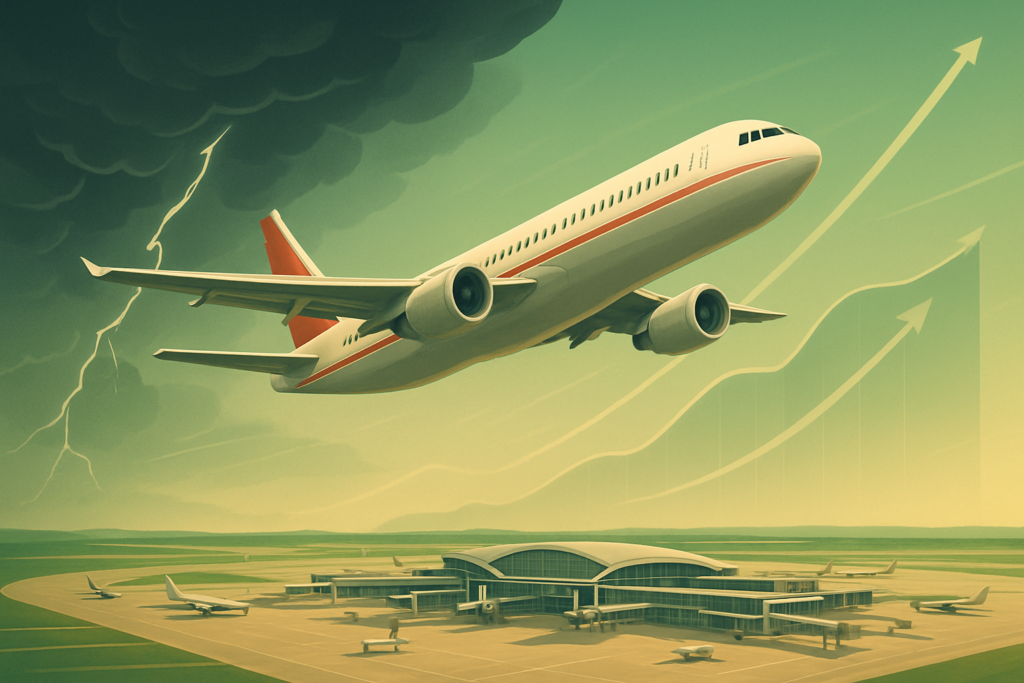
As of January 26, 2026, American Airlines Group Inc. (NASDAQ: AAL) stands at a critical juncture in its post-pandemic evolution. Once characterized by the industry’s heaviest debt load and a series of strategic pivots that alienated corporate travel partners, the Fort Worth-based carrier has spent the last 24 months in a state of "operational righting." Under the leadership of CEO Robert Isom, American has prioritized a "back-to-basics" approach, emphasizing flight completion, debt reduction, and a renewed focus on its lucrative loyalty ecosystem. However, the airline remains uniquely exposed to the volatility of North American weather patterns, a reality underscored by the recent disruptions from Winter Storm Fern in early January 2026. This research feature examines the structural resilience of American Airlines, its financial trajectory, and the persistent challenge of maintaining a global schedule in an era of increasing climate instability.
Historical Background
The story of American Airlines is a microcosm of the American aviation industry itself—a history defined by aggressive consolidation and pioneering innovation. Founded in 1930 through the union of over 80 small carriers, American rose to prominence under the legendary leadership of C.R. Smith. The airline was a first-mover in many respects, from being the first to fly the Douglas DC-3 to co-developing the SABRE computerized reservation system in the 1960s.
The modern iteration of the company was forged in the fires of the 2013 merger with US Airways. This $11 billion deal, completed while American was in Chapter 11 bankruptcy, created what was then the world's largest airline. In the subsequent decade, the company integrated two disparate fleets and cultures, ultimately moving its headquarters to a massive "Skyview" campus in Fort Worth. This transformation was meant to provide the scale necessary to compete with a resurgent Delta Air Lines (NYSE: DAL) and United Airlines Holdings (NASDAQ: UAL).
Business Model
American Airlines operates a classic hub-and-spoke business model, centered around primary "fortress hubs" in Dallas/Fort Worth (DFW), Charlotte (CLT), and Miami (MIA). These three hubs serve as the engine of the company’s domestic profitability, funneling passengers from smaller regional markets into high-frequency connection points.
The company’s revenue streams are categorized into three primary segments:
- Passenger Revenue: The core business, increasingly bifurcated between premium long-haul travel and high-volume domestic leisure.
- Cargo: A smaller but vital component, particularly on trans-Atlantic and trans-Pacific routes.
- Loyalty (AAdvantage): Perhaps the company’s most valuable asset. Valued at over $20 billion, the AAdvantage program generates high-margin cash flow through the sale of miles to partners, most notably its exclusive 10-year co-branded credit card agreement with Citigroup (NYSE: C).
Stock Performance Overview
Over the past decade, AAL has been a volatile performer, often trailing its peers in total shareholder return.
- 10-Year Horizon: Investors have seen significant erosion of value compared to the broader S&P 500, as the airline struggled with the dual burdens of merger integration and the COVID-19 pandemic.
- 5-Year Horizon: The stock spent much of the 2021-2023 period in a "recovery rut," hampered by high leverage.
- 1-Year Horizon: Entering 2026, AAL has shown signs of a rebound. After hitting a multi-year low of ~$10.92 in late 2023, the stock has traded in a range of $16 to $19 throughout 2025 and early 2026. This recovery is largely attributed to the company meeting its debt-reduction targets and abandoning a disastrous "direct-only" booking strategy that had stifled corporate sales in 2024.
Financial Performance
American’s 2025 fiscal year reflected a company balancing record demand with surging costs. The airline reported 2024 revenues of $54.2 billion, and while 2025 revenue remained strong, operating margins have been squeezed to approximately 8.0%.
The most significant financial metric for AAL remains its balance sheet. At its peak in 2021, the company carried nearly $52 billion in total debt. Through aggressive capital allocation and disciplined spending, the company reduced this by $15 billion as of late 2024. As of today, January 26, 2026, total debt sits at approximately $36.8 billion. While this deleveraging is impressive, American still maintains a higher debt-to-capital ratio (approximately 119%) than Delta or United, making it more sensitive to interest rate fluctuations.
Leadership and Management
CEO Robert Isom, who took the helm in early 2022, has steered the company through a period of strategic correction. His leadership was tested in 2024 following the departure of Chief Commercial Officer Vasu Raja. Isom’s response was a decisive pivot back to traditional distribution channels, admitting that the previous strategy had "broken" the airline's relationship with corporate travel buyers.
The current management team is focused on "reliability above all." This shift is designed to close the "reliability gap" between American and Delta, a metric that has historically allowed Delta to command a revenue premium.
Products, Services, and Innovations
To compete for high-value travelers, American has invested heavily in cabin modernization. The rollout of the Flagship Suite on Airbus A321XLR and Boeing 787-9 aircraft has significantly increased premium seat capacity. These suites feature privacy doors and lie-flat seats, positioning American to capture a larger share of the lucrative transcontinental and international business market.
On the technological front, American has pioneered "Smart Gating" technology at DFW and CLT, which uses machine learning to reduce taxi times and ensure faster gate turns. This innovation is critical for maintaining the airline’s "13-bank" schedule at DFW—a high-density scheduling model that maximizes aircraft utilization but leaves little margin for error.
Competitive Landscape
The U.S. "Big Four"—American, Delta, United, and Southwest Airlines (NYSE: LUV)—control roughly 80% of the domestic market. American currently holds the largest domestic market share at approximately 20%.
However, American's competitive position is a study in contrasts. While it dominates the South and Midwest through its DFW and CLT hubs, it faces fierce competition from United in the trans-Atlantic market and Delta in the premium domestic space. Southwest continues to challenge American in short-haul markets, though American’s extensive regional jet network (American Eagle) provides a level of connectivity to smaller cities that low-cost carriers cannot match.
Industry and Market Trends
The aviation sector in 2026 is defined by three macro trends:
- Premiumization: Leisure travelers are increasingly willing to pay for extra legroom and business-class amenities, a trend American is capitalizing on with its fleet reconfiguration.
- Sustainability: Increasing regulatory pressure to adopt Sustainable Aviation Fuel (SAF). American has signed several offtake agreements but faces significant supply chain hurdles in sourcing affordable SAF at scale.
- Labor Costs: Following the landmark pilot and flight attendant contracts of 2023-2024, labor now represents the single largest operating expense for the airline, outpacing fuel in many quarters.
Risks and Challenges: The Weather Factor
Weather remains the single greatest operational risk for American Airlines. Unlike United (with hubs in Newark and Chicago) or Delta (Atlanta and Minneapolis), American’s primary engine—DFW—is uniquely vulnerable to "convective activity" (severe thunderstorms) and winter ice.
The recent Winter Storm Fern (January 2026) serves as a potent case study. The storm paralyzed DFW for four consecutive days, resulting in over 1,000 cancellations in a single weekend. For an airline operating a 13-bank schedule, a ground stop at DFW doesn't just affect Texas; it causes a "cascading failure" across the entire network, displacing crews and aircraft from London to Los Angeles. The financial cost of such disruptions is immense, often running into the hundreds of millions of dollars in lost revenue and passenger re-accommodation expenses.
Opportunities and Catalysts
Despite weather risks, several catalysts could drive AAL shares higher in 2026:
- Loyalty Monetization: Further integration of the AAdvantage program into non-travel retail could unlock additional high-margin revenue.
- International Expansion: The delivery of more Boeing 787 Dreamliners allows American to expand its footprint in high-growth markets like India and Southeast Asia.
- Investment Grade Rating: If American can reduce total debt below $35 billion by 2027, it could see a credit rating upgrade, lowering its future borrowing costs.
Investor Sentiment and Analyst Coverage
Wall Street remains "cautiously optimistic" on AAL as of January 2026. The consensus rating is a "Moderate Buy," with an average 12-month price target of $17.60.
Institutional investors, including Vanguard and BlackRock, remain the largest shareholders, but there has been a notable increase in retail "chatter" surrounding the stock's valuation. Investors view AAL as a "value play" compared to the premium-priced DAL, but many are waiting for sustained evidence that the company can maintain its 8%+ margins in the face of economic headwinds.
Regulatory, Policy, and Geopolitical Factors
The regulatory environment in 2026 is increasingly focused on consumer protection. The Department of Transportation (DOT) has implemented stricter rules regarding automatic refunds for canceled flights—a policy that directly impacts American's bottom line during major weather events. Geopolitically, fluctuations in oil prices driven by Middle Eastern tensions continue to be the "X-factor" in American’s fuel hedging strategy (or lack thereof, as American historically hedges less than its peers).
Conclusion
American Airlines Group Inc. enters 2026 as a more disciplined and operationally sound company than it was three years ago. The aggressive deleveraging and the strategic pivot back to corporate travel have stabilized the ship. However, the airline’s heavy reliance on its South-central hubs makes it the "canary in the coal mine" for climate-related operational disruptions.
For investors, AAL represents a high-beta bet on the continued resilience of the American traveler. If the company can successfully navigate the operational minefield of unpredictable weather and maintain its debt-reduction trajectory, it may finally close the valuation gap with its peers. However, as Winter Storm Fern reminded the market, in the airline business, even the best-laid plans are often at the mercy of the clouds.
This content is intended for informational purposes only and is not financial advice.