Alcohol packaging growth is driven by premiumization, sustainability, and innovation, as brands shift to high-value, eco-friendly, and visually distinctive solutions.
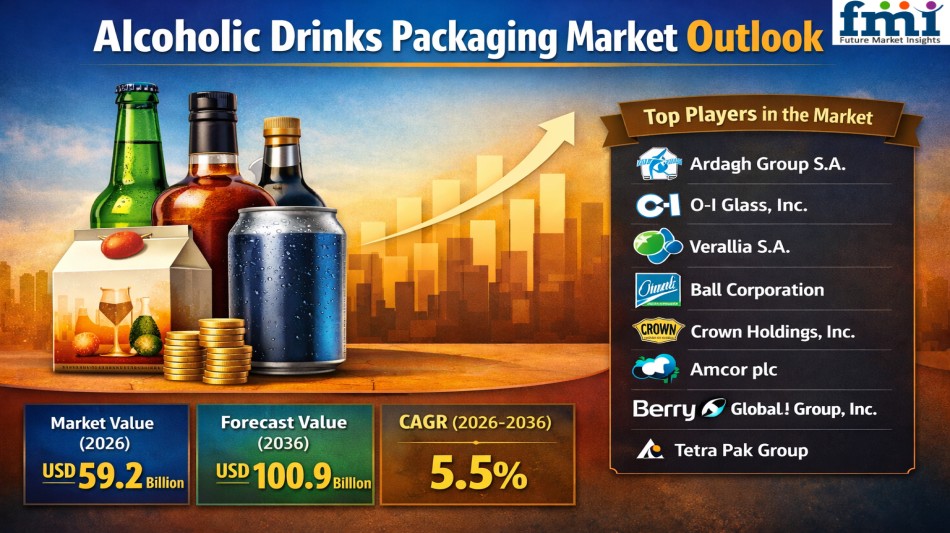
NEWARK, DELAWARE / ACCESS Newswire / February 23, 2026 / The global alcoholic drinks packaging market is entering a phase of steady, value-driven expansion, reflecting a structural shift from volume-led demand to premium, sustainability-focused packaging strategies. Valued at USD 55.8 billion in 2025, the market is projected to grow to USD 59.2 billion in 2026 and reach USD 100.9 billion by 2036, expanding at a CAGR of 5.5% over the forecast period.
This growth trajectory, according to a comprehensive strategic outlook from Future Market Insights (FMI), is being shaped less by increases in alcohol consumption and more by premiumization trends, sustainability mandates, and packaging innovation. Absolute dollar growth of USD 45.1 billion underscores how manufacturers are creating value through advanced materials, decorative enhancements, and operational efficiencies rather than sheer production volume.
Market Metrics (2026-2036)
Metric |
Value |
Market Value (2026) |
USD 59.2 Billion |
Forecast Value (2036) |
USD 100.9 Billion |
CAGR |
5.5% |
Absolute Growth |
USD 45.1 Billion |
Leading Product |
Bottles & Growlers (36.8%) |
Leading Material |
Glass (42.5%) |
Leading End Use |
Beer (39.4%) |
Discover Growth Opportunities in the Market - Get Your Sample Report Now: https://www.futuremarketinsights.com/reports/sample/rep-gb-25579
The Value Shift: From Commodity Containers to Premium Packaging Assets
The alcoholic drinks packaging ecosystem is undergoing a transformation from standardized containers to high-value, brand-enhancing assets. Packaging is no longer just a protective medium it has become a core element of brand identity, storytelling, and consumer engagement.
Manufacturers are increasingly investing in lightweight glass technologies, premium decoration techniques such as embossing and digital printing, and sustainable material innovations. These advancements enable beverage brands to differentiate on crowded retail shelves while aligning with environmental regulations.
Market Drivers: Premiumization, Craft Expansion, and Sustainability
Several structural drivers are fueling demand for alcoholic drinks packaging:
Premiumization Trends: Rising consumer preference for premium spirits and wines is increasing demand for high-end glass packaging and decorative finishes.
Craft Beverage Growth: Small-batch and craft producers require unique packaging formats to establish brand identity and attract niche audiences.
Sustainability Mandates: Regulatory pressure and environmental awareness are accelerating the adoption of lightweight materials, recycled content, and reusable packaging systems.
At the same time, raw material price volatility-particularly in glass, aluminum, and energy-continues to influence cost structures. Leading manufacturers are mitigating these challenges through long-term supply contracts, vertical integration, and energy-efficient production technologies.
Segment Spotlight: Glass Dominance and Bottle Leadership
Product Leadership: Bottles and Growlers
Bottles and growlers remain the dominant product category, accounting for 36.8% of the market share in 2026. Their continued leadership is driven by their ability to support premium branding, preserve product integrity, and integrate into circular reuse systems.
Refillable growler programs and standardized bottle designs are gaining traction, allowing brands to reduce environmental impact while maintaining premium aesthetics. Advanced decoration techniques-such as limited-edition designs and embossing-are further enhancing shelf appeal and consumer engagement.
Material Leadership: Glass Packaging
Glass continues to dominate the material segment, holding a 42.5% market share. Its premium perception, recyclability, and ability to preserve flavor and quality make it the preferred choice for spirits, wine, and premium beer.
Manufacturers are investing heavily in decarbonization initiatives, including increased recycled content and energy-efficient furnace technologies. Innovations in color consistency and UV protection are also enhancing product quality and extending shelf life.
End-Use Leadership: Beer Segment
The beer segment leads with a 39.4% share, supported by global consumption patterns and the continued relevance of both mainstream and craft beer markets. However, growth is increasingly shifting toward premium spirits and ready-to-drink (RTD) beverages, which offer higher margins and demand more sophisticated packaging solutions.
Regional Powerhouses: Emerging Markets Drive Growth
While mature markets maintain steady demand, emerging economies are driving the next wave of expansion:
China (7.6% CAGR): A major production and consumption hub, China's market is evolving with premiumization and innovation, despite short-term demand fluctuations.
India (7.0% CAGR): Rapid urbanization, a growing middle class, and rising demand for premium spirits are positioning India as a key growth engine.
Germany (6.4% CAGR) & France (5.8% CAGR): Strong wine and spirits heritage sustains demand for high-quality, premium packaging.
United States (4.7% CAGR): A mature market driven by sustainability upgrades, premium spirits, and RTD beverage growth.
United Kingdom (5.2% CAGR) & Japan (3.5% CAGR): Replacement demand and sustainability initiatives dominate, with limited volume growth.
Dynamics of the Decade: Sustainability and Circularity
Looking ahead to 2036, sustainability will remain the defining force shaping the alcoholic drinks packaging market:
Decarbonization Initiatives: Manufacturers are transitioning to electric and hydrogen-powered furnaces to reduce emissions.
Recycled Content Integration: Increased use of recycled glass and aluminum is becoming a competitive differentiator.
Reuse Systems: Refillable packaging models are gaining momentum, particularly in Europe.
Paper-Based Alternatives: Multi-pack carriers are increasingly shifting from plastic to paper-based solutions.
Sustainability certifications are rapidly becoming prerequisites for market access, particularly in regions with stringent environmental regulations.
Technology and Innovation: Customization and Efficiency
Technological advancements are enabling greater flexibility and efficiency across the value chain:
Digital Printing: Enables small-batch customization for craft producers and limited-edition releases.
Lightweighting Technologies: Reduce material usage and transportation costs while maintaining structural integrity.
Smart Packaging: Emerging innovations include traceability features and enhanced labeling for regulatory compliance.
These technologies are helping manufacturers balance cost pressures with the need for differentiation and sustainability.
Competitive Landscape: Scale, Sustainability, and Integration
The alcoholic drinks packaging market remains highly competitive, with a mix of global conglomerates and regional specialists. However, market power is increasingly concentrated among large, vertically integrated players capable of delivering consistent quality, advanced decoration, and regulatory compliance at scale.
Key competitive factors include:
Energy Hedging and Cost Stability: Protecting margins amid volatile input costs.
Recycled Content Integration: Meeting sustainability targets and regulatory requirements.
Premium Decoration Capabilities: Enhancing brand value and shelf differentiation.
Supply Chain Resilience: Ensuring reliable delivery in a complex global environment.
Global beverage companies are also strengthening their negotiating power by multi-sourcing packaging suppliers, intensifying competition and driving innovation.
Strategic Outlook: Margin Optimization Over Volume Growth
The market is shifting toward a "value-over-volume" paradigm, where premium packaging and sustainability credentials drive profitability. Even as traditional beer consumption stabilizes or declines in some regions, growth in premium spirits, RTD beverages, and export markets is sustaining demand for high-value packaging formats.
Industry leaders are increasingly focusing on:
Developing premium, design-driven packaging solutions
Investing in sustainable materials and processes
Enhancing operational efficiency through technology
Building long-term partnerships with beverage brands
As one industry executive noted, maintaining a premium and resilient product portfolio is key to navigating market volatility and ensuring long-term growth.
Key Players in the Alcoholic Drinks Packaging Market
Leading companies shaping the global landscape include:
Ardagh Group S.A., O-I Glass, Inc., Verallia S.A., Ball Corporation, Crown Holdings, Inc., Amcor plc, Berry Global Group, Inc., Tetra Pak Group, SIG Combibloc Group AG, Smurfit Kappa Group plc, DS Smith plc, Mondi plc, WestRock Company, TricorBraun, Inc., Saxco International, LLC, Graham Packaging Company, L.P., Encore Glass, Inc., Vetreria Etrusca S.r.l., AGI Glaspac (AGI Greenpac Ltd.), Orora Limited, Sealed Air Corporation
For an in-depth analysis of evolving formulation trends and to access the complete strategic outlook for the Alcoholic Drinks Packaging Market through 2036, visit the official report page at: https://www.futuremarketinsights.com/reports/alcoholic-drinks-packaging-market
Related Reports:
Soft Drinks Packaging Market - https://www.futuremarketinsights.com/reports/soft-drinks-packaging-market
Packaging Jar Market - https://www.futuremarketinsights.com/reports/packaging-jars-market
Beverage Packaging Market - https://www.futuremarketinsights.com/reports/global-beverage-packaging-market
Ready to Drink (RTD) Packaging Market - https://www.futuremarketinsights.com/reports/ready-to-drink-packaging-market
About Future Market Insights (FMI)
Future Market Insights (FMI) is a leading provider of market intelligence and consulting services, serving clients in over 150 countries. Headquartered in Delaware, USA, with a global delivery center in India and offices in the UK and UAE, FMI delivers actionable insights to businesses across industries including automotive, technology, consumer products, manufacturing, energy, and chemicals.
An ESOMAR-certified research organization, FMI provides custom and syndicated market reports and consulting services, supporting both Fortune 1,000 companies and SMEs. Its team of 300+ experienced analysts ensures credible, data-driven insights to help clients navigate global markets and identify growth opportunities.
For Press & Corporate Inquiries
Rahul Singh
AVP - Marketing and Growth Strategy
Future Market Insights, Inc.
+91 8600020075
For Sales - sales@futuremarketinsights.com
For Media - Rahul.singh@futuremarketinsights.com
For web - https://www.futuremarketinsights.com/
SOURCE: Future Market Insights, Inc.
View the original press release on ACCESS Newswire